DEEP ROCK GALACTIC: SURVIVOR – THE ADDICTIVE SYMPHONY OF DIGGING AND DESTRUCTION
Deep Rock Galactic: Survivor Review: A Relentless, Addictive Solo Descent Into Hoxxes IV
Positioning yourself wisely, making split-second tactical decisions, gathering as many resources as your pockets can hold, and escaping by the skin of your teeth—this is the core foundation of Deep Rock Galactic: Survivor. Developed by Funday Games and published by Ghost Ship Publishing, this title fully launched out of Early Access on September 17, 2025, for PC and Xbox Series X|S (complete with an appearance on Xbox Game Pass).
For purists of the franchise, the concept alone might raise an eyebrow. The original Deep Rock Galactic built its massive, dedicated fanbase on the back of camaraderie, chaotic four-player co-op, and high-intensity first-person shooter mechanics. Survivor abandons all of that. It shifts the perspective to an isometric, top-down view, drops the multiplayer entirely, and steps squarely into the "bullet heaven" auto-shooter genre popularized by Vampire Survivors. But can a lone dwarf carrying a pickaxe and an automated turret capture the magic of a full mining crew? Let’s find out.

Story: Just You Against Planet Hoxxes IV
If you are looking for a deep, cinematic narrative, you are barking up the wrong corporate tree. Management doesn't pay you to read lore; they pay you to mine. In Deep Rock Galactic: Survivor, the story is virtually non-existent, which is perfectly acceptable given the arcade nature of the genre.
You play as a lone dwarf dropped into the incredibly hostile caverns of Hoxxes IV. Your objective is simple: execute your corporate assignment, gather precious minerals like Nitra and Gold, and survive long enough for the Drop Pod to pull you out. Standing between you and your paycheck are hundreds, if not thousands, of relentless alien Glyphids swarming from the dark. Every run follows the exact same formula: descend, mine, survive, and escape. While that sounds repetitive on paper, the sheer adrenaline of weaving through a sea of bugs creates a highly engaging loop that makes it incredibly difficult to close the game.
Gameplay: The Satisfying Synergy of Mining and Moving
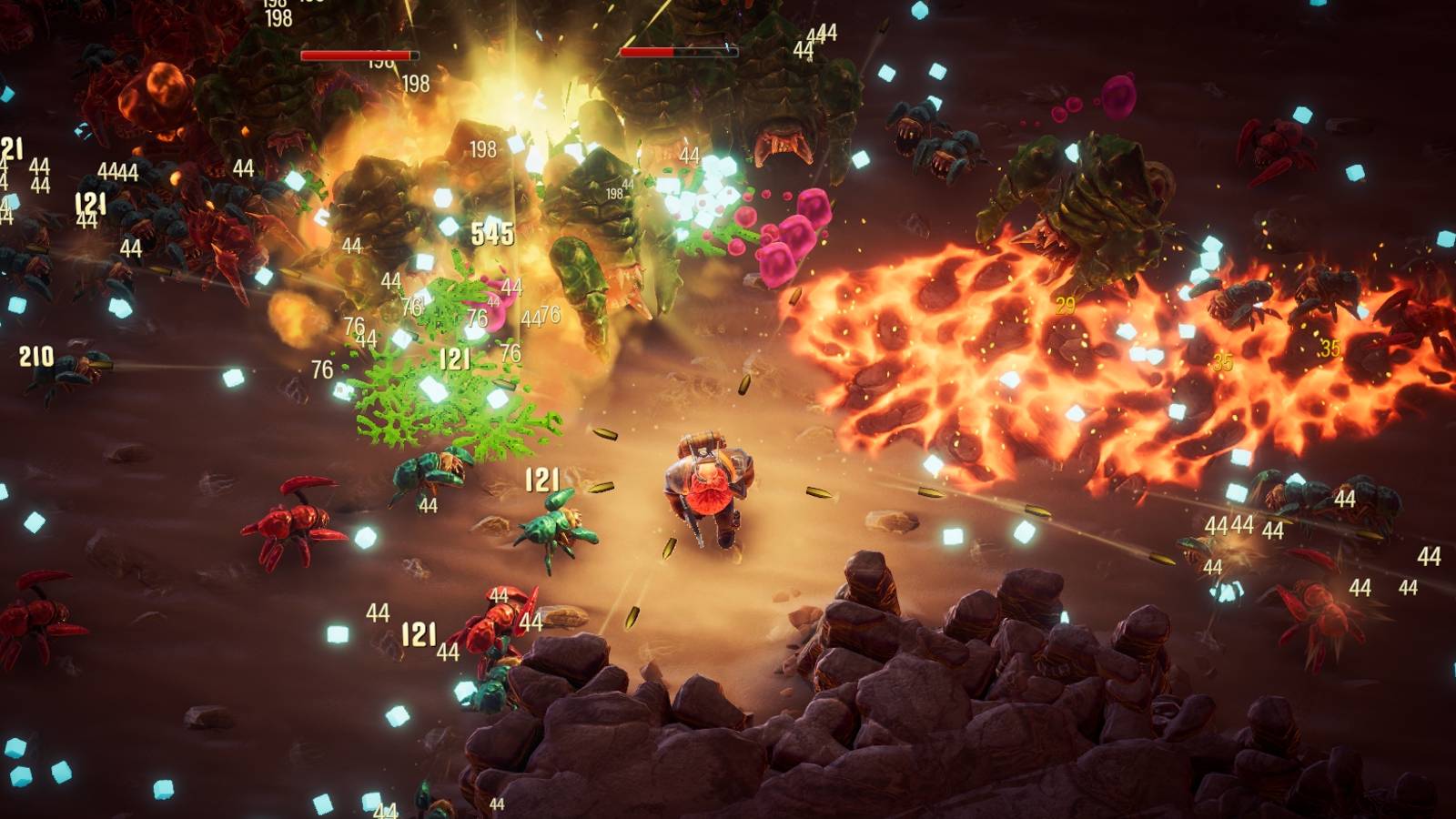
As an auto-shooter, your primary mechanical input is movement. Your weapons fire automatically based on their specific cooldowns and targeting behaviors—meaning your true weapon is your positioning.
The Art of the Dig
What separates Deep Rock Galactic: Survivor from other clones in the genre is its interactive environment. Your pickaxe allows you to mine directly through solid rock walls. This changes the combat landscape entirely. Instead of just running in circles on an open map, you are actively carving out bottlenecks, digging escape routes through rock faces, and trapping massive alien swarms in narrow choke points where your automated weapons can shred them efficiently.
As you mine and kill bugs, you gather XP crystals that trigger mid-run level-ups. Each level grants you a choice of three randomized upgrades, allowing you to build out your dwarf into an unstoppable engine of destruction. You can specialize in:
- Weapon Power: Upgrading your starting guns or adding new elemental damage types like fire or cryo.
- Mining Speed: Essential for tearing through terrain faster when a swarm traps you against a wall.
- Movement and Luck: Boosting your speed to outrun faster Glyphid variants or increasing your critical hit chances.
Class Archetypes and Boss Encounters
The game features the four iconic classes from the original game—Scout, Gunner, Engineer, and Driller. Each class alters your starting loadout and stats significantly. For example, the Scout is nimble and excels at dodging, while the Engineer specializes in high-tech turrets and defensive constructs.
Each run is broken into several distinct stages, culminating in a major boss encounter. The bosses themselves are essentially massive, bullet-sponge versions of elite regular enemies, which feels a bit uninspired. However, fighting these heavy hitters while the game continuously throws waves of smaller bugs at you forces you to stay hyper-focused on your movement and spacing. One wrong turn into a dead-end tunnel means instant death.
Visuals: A Claustrophobic, Low-Poly Masterclass
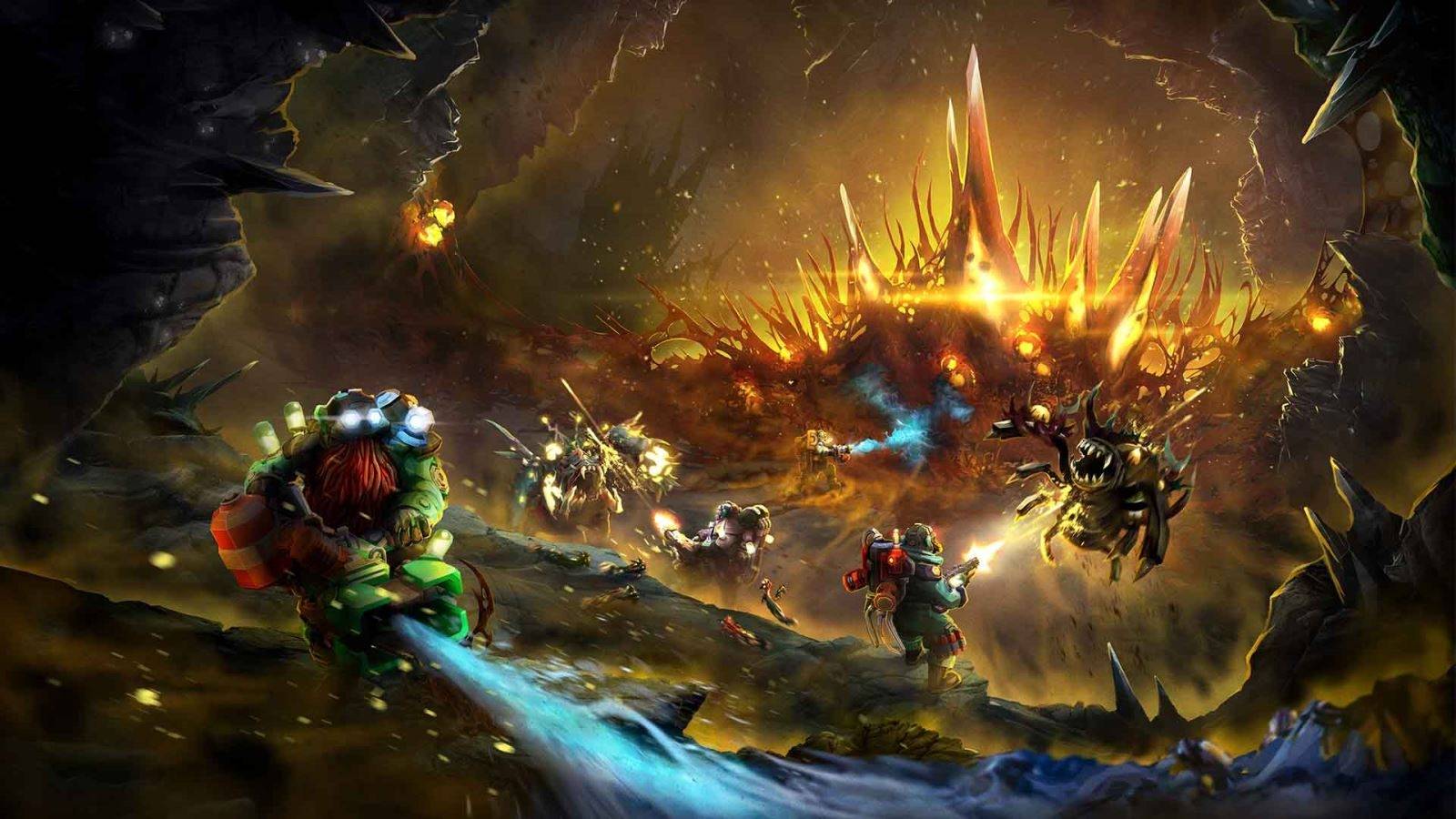
Visually, Deep Rock Galactic: Survivor leans heavily into atmosphere over cutting-edge graphical fidelity. If you are expecting advanced lighting effects like ray tracing or hyper-detailed particle systems, you won't find them here. The models are stylized, blocky, and distinctly low-poly.
However, the way the game utilizes lighting and contrast is exceptional. The caverns are pitch-black until your mining lamps or thrown flares pierce the gloom. As you navigate biomes like the Magma Core or the Crystalline Caverns, the vibrant glow of exposed minerals against the dark stone looks stunning. This smart use of light sources creates a genuine sense of claustrophobia, perfectly mirroring the tension of being trapped deep underground.
The only major visual flaw lies in the level design. While the color palettes shift between biomes, the structural layout of the caverns quickly starts to look identical, contributing to a sense of visual repetition after a few hours of play.
Audio Design: The Weight of the Deep
The sound design is arguably one of the strongest elements of the package. Funday Games did an incredible job ensuring that every weapon and tool carries a distinct, satisfying weight. The sharp "clink" of your pickaxe hitting a vein of gold, the mechanical roar of a minigun spin-up, and the guttural shrieks of an approaching swarm provide excellent tactile feedback.
The environmental audio works overtime to enhance the immersion. You’ll hear the hollow echoes of your own footsteps in open caverns, the distant rumbling of shifting earth, and the unsettling whispers of alien flora. Unfortunately, the soundtrack itself is rather unmemorable. It dynamic scales—getting louder when a swarm arrives and dropping down during exploration—but it lacks the distinct, memorable themes needed to truly leave an impression.
Technical Performance
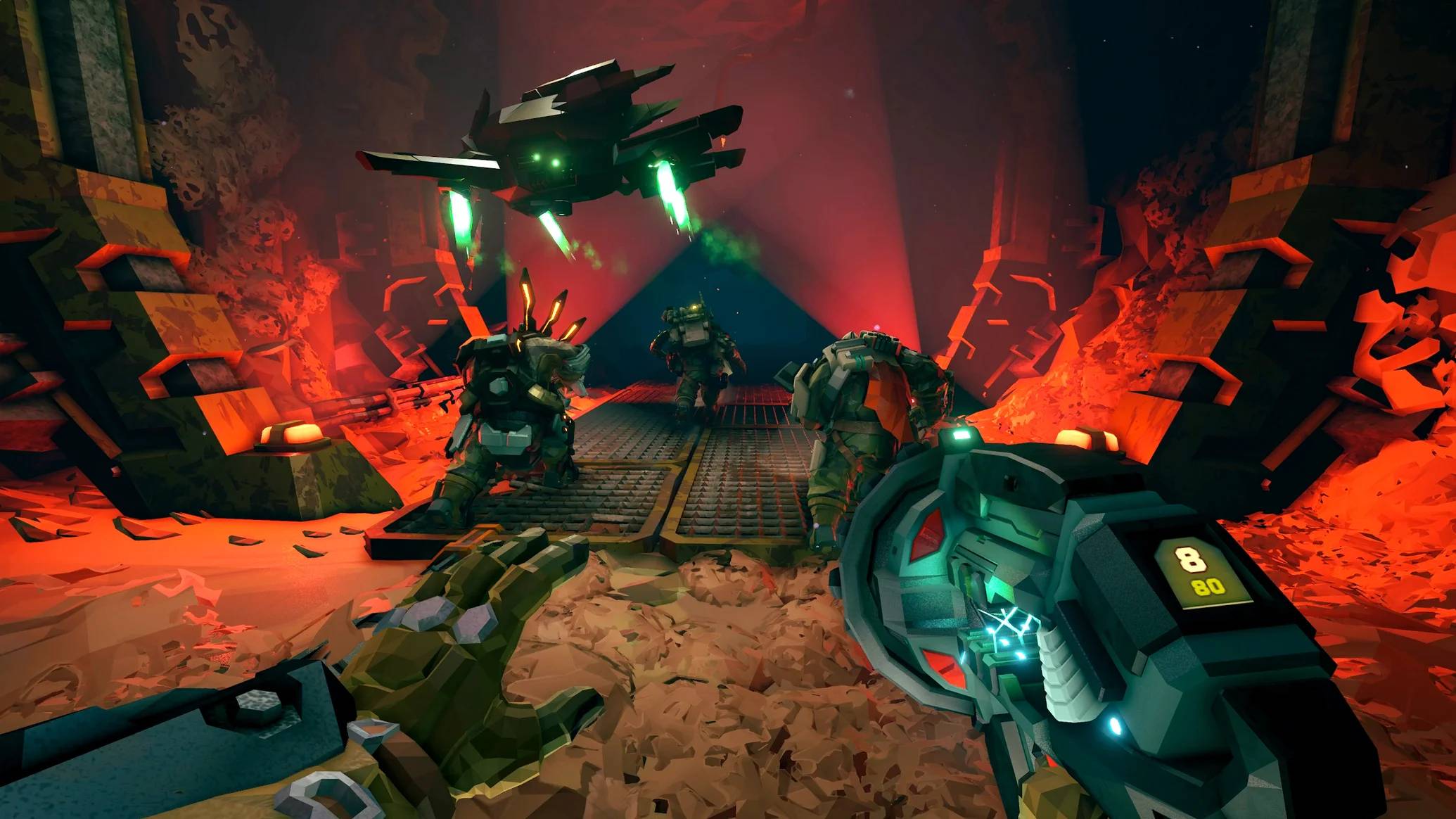
On our test platform (Ryzen 9 5900x, RTX 3080 Ti, 32 GB RAM), Deep Rock Galactic: Survivor ran flawlessly. The game is highly optimized, effortlessly maintaining a smooth, stutter-free framerate even when hundreds of bugs are exploding simultaneously on screen. Given its minimalist visual style, this title is incredibly friendly to mid-range setups and older laptops, making it a perfect companion for portable hardware like the Steam Deck.
| Game Details | Information |
|---|---|
| Developer | Funday Games |
| Publisher | Ghost Ship Publishing |
| Platforms | PC, Xbox Series X|S |
| Genre | Top-down Auto-shooter / Roguelite |
| Release Date | September 17, 2025 |
Final Verdict: Pure, Distilled Fun
Deep Rock Galactic: Survivor does not attempt to reinvent the wheel, nor does it try to match the cinematic scale of modern AAA titles. It knows exactly what it wants to be: a compact, highly focused, and relentlessly addictive spin-off that honors the spirit of its parent franchise.
The combination of classic survivor-like auto-shooting with tactical, environmental destructibility creates a gameplay loop that is incredibly rewarding. Yes, the bosses are uninspired, and the level structure can feel monotonous over long sessions. But if you are looking for a game that nails the "just one more run" mentality, this solo trek into the dark is worth every penny.
Pros:
- Immensely addictive, tactical auto-shooting gameplay.
- Unique mining mechanics add deep strategic positioning.
- Atmospheric lighting creates a stellar sense of dread.
- Excellent optimization across a wide range of PC hardware.
- Repetitive level design can lead to visual fatigue.
- Boss fights are simple, oversized bullet-sponges.
- Lack of story or narrative drive for solo players.
Final Score: 8/10 — Rock and Stone!