Ruiner 2 Reveals New Gameplay Trailer as It Evolves into a Next-Gen Cyberpunk Action RPG
Ruiner 2 Gameplay Trailer Reveals a Bigger, Deeper Cyberpunk Action RPG
Ruiner 2 has officially shown off its gameplay, and the sequel appears to be taking a much bigger swing than simply repeating what made the original game stand out. The first Ruiner was known for its brutal top-down action, aggressive pacing, cyberpunk violence, and stylish dystopian world. With Ruiner 2, Reikon Games is shifting the formula into something more ambitious: a next-generation cyberpunk action RPG built around character switching, layered progression, tactical combat, and co-op play.
That change is immediately noticeable. Instead of focusing only on fast reflexes and raw aggression, Ruiner 2 now appears to be built around systems. Combat is still violent, fast, and stylish, but the sequel adds more decision-making beneath the chaos. Players will not only need to react quickly; they will also need to understand builds, resources, shell combinations, and ability synergy.
For fans of the original, that may be exciting or unexpected depending on what they loved most about Ruiner. The sequel looks familiar in tone, but very different in structure. It still carries the same industrial cyberpunk edge, but the gameplay has clearly evolved into a broader action RPG experience.
Ruiner 2 Returns to the Dystopian World of Rengkok
Ruiner 2 brings players back to Rengkok, the oppressive cyberpunk setting that helped define the original game’s identity. This is not a clean neon future full of luxury and progress. Rengkok is a concrete nightmare where corporations control nearly every part of human existence.
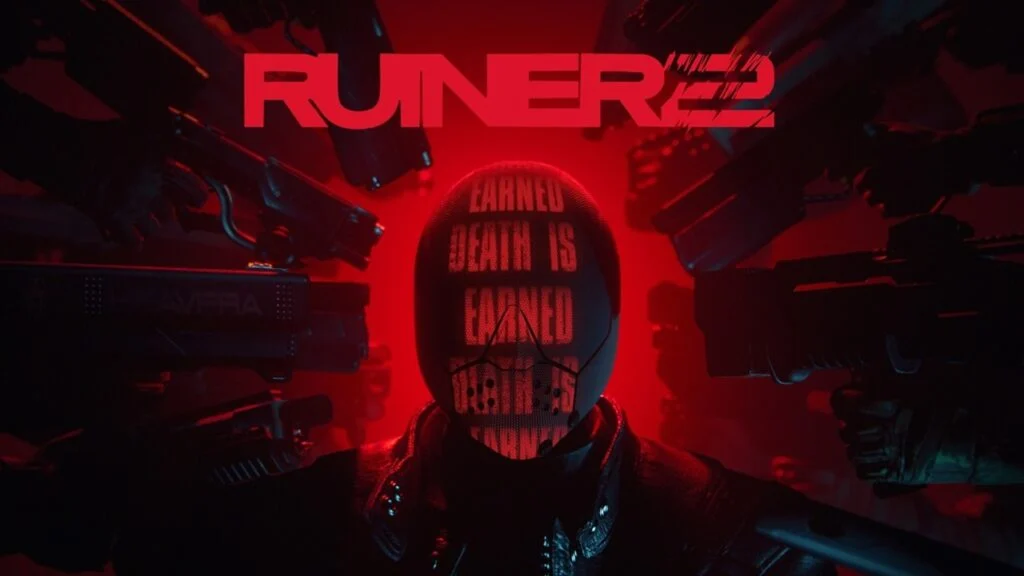
In this world, people are not free citizens. They are assets. Life is owned, labor is exploited, and even death is treated like a violation of contract. The idea that dying can be considered a breach of corporate agreement tells you everything you need to know about the tone of Ruiner 2. This is a world designed to keep people alive only long enough to keep suffering, producing, and obeying.
That premise gives the sequel a strong narrative foundation. At its core, Ruiner 2 appears to be about breaking out of a system built to keep people trapped. The corporations do not simply rule through weapons and surveillance. They rule through contracts, bodies, technology, and systems that turn survival itself into another form of control.
This makes Rengkok more than a backdrop. It is the reason the game’s combat, progression, and character systems feel so important. Every upgrade, every shell, and every fight exists inside a world where identity and autonomy are constantly being manipulated.
A Major Shift From Top-Down Shooter to Action RPG
The biggest change in Ruiner 2 is its genre direction. The original game was a top-down shooter with fast movement, sharp violence, and a compact action focus. Ruiner 2 still seems interested in speed and brutality, but it is no longer just about blasting through enemies from an overhead perspective.
Instead, the sequel is being positioned as a cyberpunk action RPG. That means deeper builds, more character customization, multiple progression paths, resource management, and a stronger emphasis on tactical combat decisions.
This shift could make Ruiner 2 feel like a much larger game. Rather than simply giving players better weapons or faster attacks, the sequel asks them to think about how different character shells work together. Combat is no longer only about surviving a violent encounter. It is about preparing for that encounter, switching at the right time, and using the correct tools in the correct order.
That is a meaningful evolution. It suggests that Ruiner 2 wants to keep the first game’s aggression while giving players more control over how they express that aggression.
The Shell System Is the Core of Ruiner 2
The most important new feature in Ruiner 2 is the shell system. This system allows players to instantly switch between different characters, known as shells, during combat. Each shell has its own abilities, gear, strengths, and playstyle.
This is not just a cosmetic character-swap feature. The shell system appears to be the foundation of the entire game. Players can chain abilities across multiple shells, create lethal combos, and build synergies that turn a fight in their favor. A single shell may be useful in one situation, but the real power comes from understanding how the entire roster works together.
That adds a tactical layer to every battle. Reflexes still matter, especially in a game with Ruiner’s violent DNA, but knowledge may matter even more. Players will need to know when to swap shells, which abilities to combine, and how to manage different combat roles under pressure.
This could make Ruiner 2 feel more strategic than the original without slowing it down. If the system works well, fights may become a constant rhythm of movement, attacks, swaps, cooldowns, and resource decisions. Instead of simply reacting to enemies, players will be building sequences on the fly.
Every Shell Has Its Own Skill Tree
Each shell in Ruiner 2 has an active skill tree with branching paths. That means players can shape individual shells in different ways instead of treating them as fixed characters. One shell may be built for burst damage, while another could focus on defense, crowd control, mobility, support, or sustained pressure.
This kind of progression gives the game more replay value. Players who enjoy buildcrafting will likely spend time experimenting with different shell setups to find the most effective combinations. Since every shell has its own skills, the roster becomes more than a list of characters. It becomes a toolkit.
The sequel also includes a passive skill tree that applies across the entire roster. This is an important detail because it gives players both individual and global progression. Active skill trees let you specialize specific shells, while passive upgrades help improve your overall strategy.
Together, these systems suggest that Ruiner 2 is aiming for depth. It is not just adding RPG mechanics for the sake of having more menus. The skill trees seem designed to support the shell-switching combat loop and give players meaningful choices about how they approach each fight.
Power, CPU, and Memory Create Meaningful Trade-Offs
Another major part of Ruiner 2 is resource management. Every shell runs on three resources: Power, CPU, and Memory. These resources determine how players equip and develop their shells.
The important point is that there are no free slots. Everything comes with a cost. If you want to equip stronger abilities, heavier gear, or more specialized tools, you will need to make sacrifices somewhere else. That gives the game a more tactical RPG structure.
This system could prevent players from simply stacking the most powerful upgrades without thinking. Instead, every build becomes a trade-off. Do you want raw damage or more flexibility? Do you want a shell with powerful abilities but limited resources? Do you focus on one overpowered setup or create a balanced roster that can handle more situations?
Those decisions are exactly what can make action RPGs satisfying. The best builds are not always the ones with the biggest numbers. Sometimes the strongest setup is the one that lets your shells work together efficiently.
Solo and Co-Op Play Change the Experience
Ruiner 2 can be played solo, but it also supports co-op for up to three players. That is a major addition, especially for a game built around multiple shells, abilities, and combat roles.
In solo play, the shell system gives one player control over the full roster. You are responsible for switching, managing resources, and chaining abilities yourself. In co-op, the same systems could create a very different rhythm. Players may be able to coordinate shells, specialize roles, and build team strategies around each other.
Co-op also fits the game’s systems-driven direction. If enemies and encounters are designed around teamwork, Ruiner 2 could become a strong multiplayer action RPG for players who enjoy chaotic cyberpunk combat with friends. At the same time, solo players should still be able to experience the full game without needing a team.
The key will be balance. A game like this needs to feel satisfying alone and in co-op. If Reikon Games can make both modes feel equally intense, Ruiner 2 could have a much broader appeal than the original.
Will Fans of the Original Ruiner Like Ruiner 2?
The answer depends on what players want from a sequel. If you loved Ruiner mainly because it was direct, punchy, and focused, Ruiner 2 may feel like a very different game. The sequel is clearly adding more systems, more progression, and more complexity.
However, if you wanted the world of Ruiner to grow into something bigger, this direction makes sense. The original game had a strong identity, but its universe always felt like it could support more. Rengkok is a brutal setting with enough atmosphere and corporate horror to justify a deeper RPG structure.
Ruiner 2 seems to be keeping the violent cyberpunk tone while expanding how players interact with that world. The result may not be a simple follow-up, but it could be a more ambitious evolution.
Final Thoughts
Ruiner 2 looks like a bold sequel. Rather than repeating the top-down shooter formula of the first game, Reikon Games is building a next-gen cyberpunk action RPG centered on shell switching, skill trees, resource trade-offs, and co-op play.
The return to Rengkok gives the sequel a familiar dystopian foundation, but the new gameplay systems suggest a much deeper experience. The shell system could become the game’s defining feature, especially if players can create creative combos and meaningful synergies between characters.
This is a riskier direction than simply making a bigger version of the original Ruiner. But it is also more exciting. Ruiner 2 has the potential to turn a cult cyberpunk action game into something broader, richer, and more replayable.
For fans of dark sci-fi, corporate dystopias, action RPGs, and fast combat systems, Ruiner 2 is now one to watch closely.
Ruiner 2 FAQ
What kind of game is Ruiner 2?
Ruiner 2 is a next-generation cyberpunk action RPG. It shifts away from the original game’s top-down shooter structure and focuses more on shell switching, progression systems, and tactical combat.
Where does Ruiner 2 take place?
The game returns to Rengkok, a dystopian cyberpunk city where corporations control life, labor, death, and identity.
What is the shell system in Ruiner 2?
The shell system allows players to switch between different characters instantly during combat. Each shell has unique abilities, gear, resources, and skill trees.
Does Ruiner 2 have co-op?
Yes. Ruiner 2 supports solo play and co-op for up to three players.
Is Ruiner 2 similar to the first Ruiner?
Ruiner 2 keeps the cyberpunk tone and brutal action style, but it appears to be a much deeper action RPG rather than a straightforward top-down shooter sequel.