DRAGON IS DEAD: MASTERING THE GRIND OF ETERNAL DEFEAT
Dragon Is Dead Review: A Brutal, Beautiful, and Addictive Roguelike
Let’s be honest: the roguelike genre is not for everyone. For many players, the core concept of endless repetition—dying, respawning, and doing it all over again—is the antithesis of a good time. I have historically counted myself among that group. While genre-defining titans like Hades have managed to capture my attention, the vast majority of games that lean into the "grind" of roguelike mechanics often fail to keep me engaged for more than a few hours. That is why it came as such a massive surprise that Dragon Is Dead—the 2D roguelike action RPG from TeamSuneat—managed to hook me so effectively that I couldn't put it down.
If a cynical, roguelike-averse player can find themselves losing track of time in the dark, dragon-infested world of Dragon Is Dead, there is clearly a "winning formula" at play. By stripping away unnecessary complexity and doubling down on a satisfying, loot-driven progression loop, TeamSuneat has crafted a title that feels both punishingly difficult and intensely rewarding. Here is our comprehensive review of one of the most addictive indie experiences of the year.
A Story That Stays Out of the Way
If you are coming to Dragon Is Dead expecting a narrative masterpiece with deep, branching plotlines and complex character arcs, you should temper your expectations. You step into the boots of the last surviving member of a clan of deathless warriors, tasked with a simple, singular objective: march forward, conquer the corrupted forces of the deep, and slay the corrupted Dragon. It is a plot as old as time, and to be perfectly blunt, it is clearly not the game's primary focus.
The story exists merely to provide a thematic skeleton, giving you a reason to move from one biome to the next. The developers at TeamSuneat clearly understood that the strength of this title lies in the moment-to-moment combat loop, not in long-winded exposition. While the narrative is functional and helps connect the dots, the game is at its best when you stop reading text logs and start focusing on your build.
The Gameplay Loop: Death, Loot, and Progression
The progression in Dragon Is Dead is what separates it from its peers. As in most roguelikes, your goal is to reach and defeat the final boss, but the path is filled with countless mobs, mini-bosses, and environmental hazards. Every death sends you back to the very beginning, and because the game features a linear 2D structure, you will be following the exact same path on every single run.
The Loot-Retaining Revolution
In most titles of this genre, death means losing everything. Your hard-earned swords, helmets, and armor are usually stripped away, forcing you to start with basic gear. Dragon Is Dead completely flips this script. When you die, you lose your currency and your accumulated XP, but you keep your gear.
This single design choice fundamentally changes the game. Instead of treating your equipment as temporary consumables, you start to treat them as permanent investments. When you finally find a legendary weapon—perhaps a fire-imbued greatsword that allows you to breeze through the early-game gauntlets—you aren't just using it to survive the current run. You are nurturing it. You are pouring your resources into upgrading it, sharpening its stats, and turning it into a god-slaying instrument. This shift from "temporary loot" to "long-term investment" provides a sense of permanent progression that keeps the "one more run" feeling alive for hours on end.
Combat: Frantic, Chaotic, and Aggressive
If there is one area where Dragon Is Dead shows its indie roots, it is the combat. It is not the most sophisticated or deep combat system you will ever experience. In fact, if you want to be uncharitable, you could call it a bit of a "button-mashing" affair.
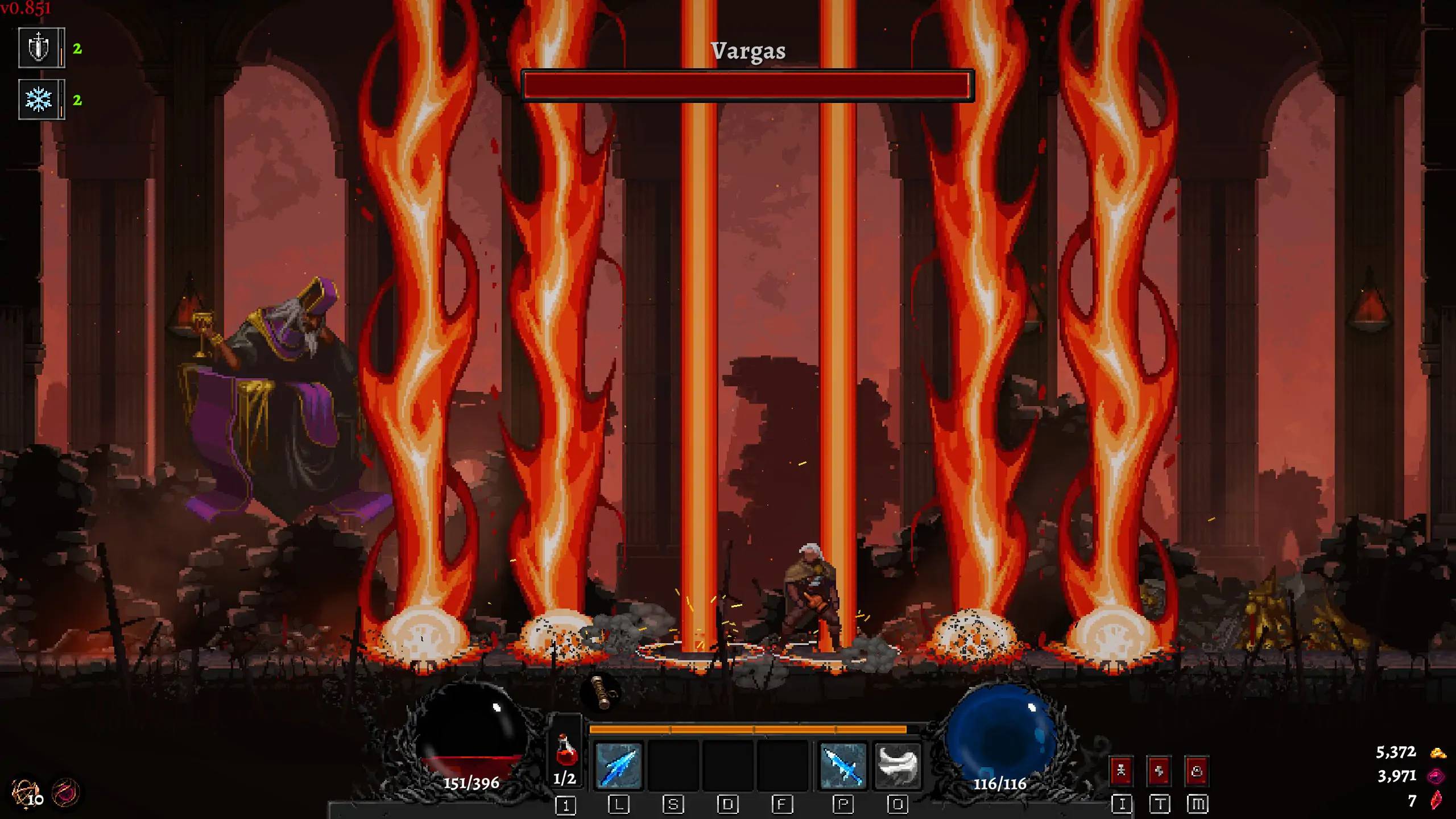
You have a standard attack, and as you unlock skills, they are automatically mapped to auxiliary buttons. The combat loop is essentially: spam your primary attacks, utilize your movement abilities to dodge incoming fire, and leap to avoid ground-based hazards. It is fast, it is frenetic, and it is largely reactive.
While standard enemies are relatively easy to dispatch, the bosses are a different beast entirely. These fights are designed to be chaotic, overwhelming displays of screen-clearing attacks that require you to react in milliseconds. There is a "twitchy" nature to the boss encounters that demands total concentration. While a more granular combat system with deeper combo chains would have been welcome, there is a certain visceral satisfaction in the sheer speed of the combat that prevents it from ever feeling dull.
A Visual Feast of Pixel Art
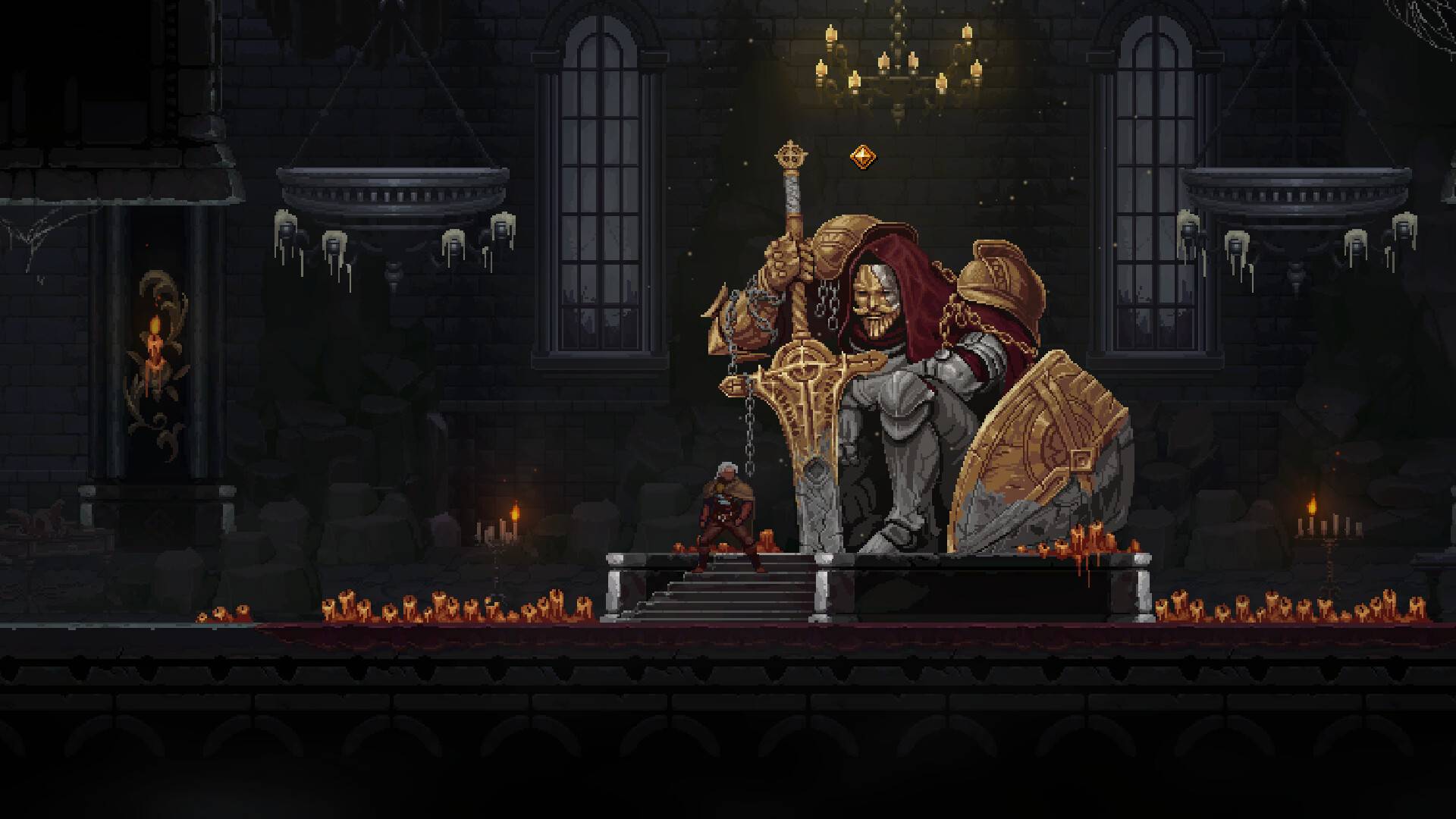
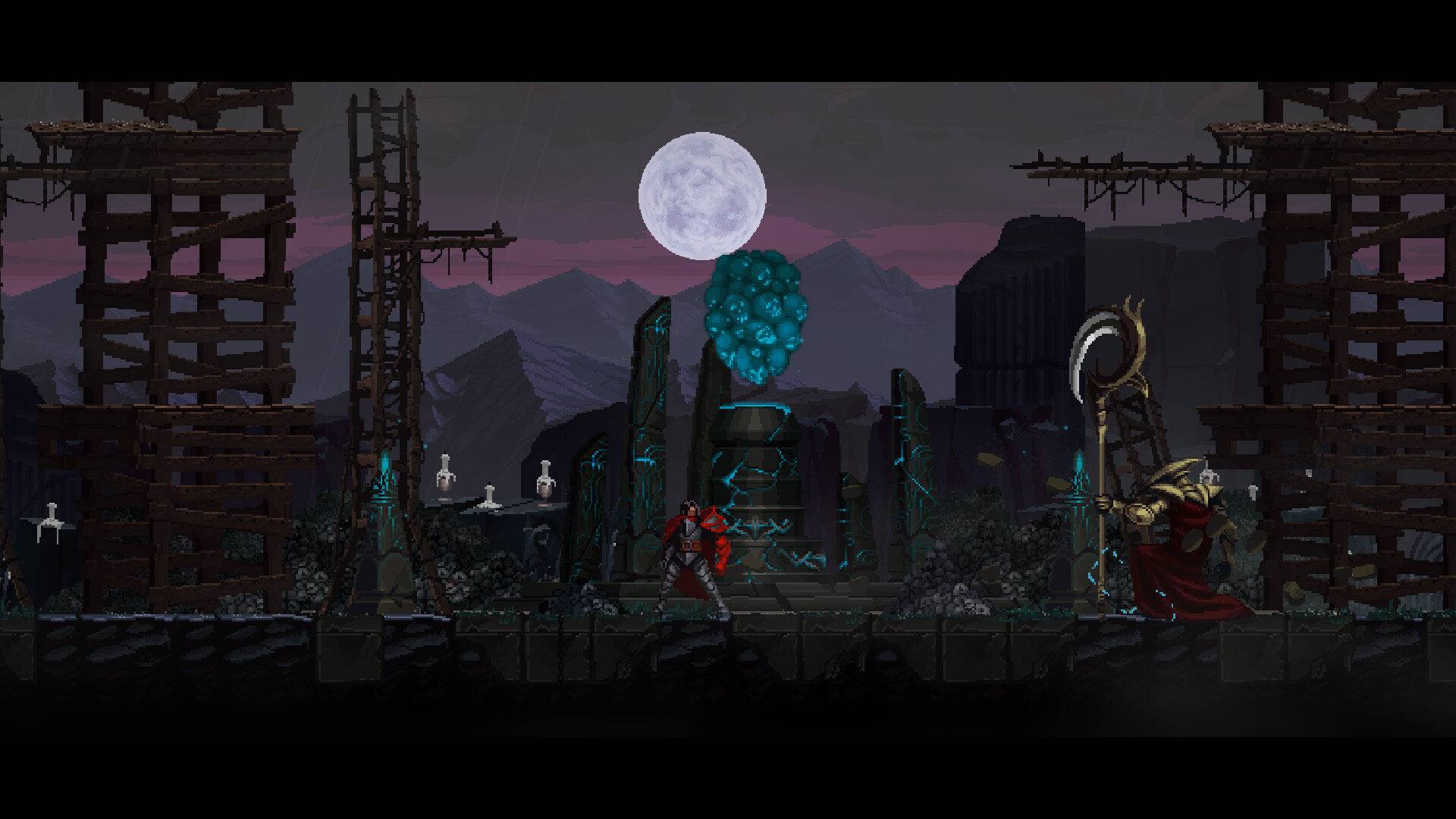
If the combat is functional, the visual presentation is spectacular. Dragon Is Dead is a small visual feast. It does not rely on massive 3D polygons or flashy ray-tracing; instead, it utilizes a detailed pixel-art style that feels as if every single frame was lovingly hand-drawn.
The color palette is used to masterful effect to establish tone. The dark fantasy environments feel oppressive, moody, and dangerous, but they are never muddy or difficult to read. Whether you are traversing a fire-scorched canyon or a damp, subterranean tomb, the pixel art capably portrays the oppressive mood of each biome. It is a masterclass in blending retro-inspired aesthetic design with modern, high-contrast visual flourishes.
The Audio Shortcoming
The most disappointing aspect of Dragon Is Dead is, unfortunately, the audio design—specifically regarding the narrative delivery. The dialogue is entirely unvoiced. In a game with a significant amount of text, this is a major hurdle for immersion. Lengthy, unvoiced dialogue blocks break the flow of the game, often causing players (myself included) to skip through story beats just to get back to the gameplay.
I understand the limitations of indie budgets, but even a few key lines of voice-acted dialogue during boss introductions or major plot reveals would have elevated the experience significantly. As it stands, the audio is functional but forgettable, and the complete lack of voiceover means the story's emotional potential remains largely untapped.
Final Verdict: Why You Should Give It a Chance
Dragon Is Dead does not reinvent the roguelike formula, and it isn't trying to. Instead, it refines a specific style of addictive, gear-focused action that rewards persistence over blind luck. Its straightforward design—kill monsters, collect loot, upgrade your permanent gear, and try again—creates a loop that is surprisingly easy to fall into and very hard to climb out of.
While the shallow combat depth and the lack of voice acting hold it back from becoming an all-time classic, it is a fantastic "palate cleanser" of a game. If you are tired of overly complicated RPGs or if you, like me, usually find the roguelike genre to be too repetitive, Dragon Is Dead might be the title that changes your mind. It’s a beautifully crafted, pixel-art spectacle that offers enough "just one more run" charm to make it well worth the price of admission.
| Feature | Impression |
|---|---|
| Pixel Art | Detailed, moody, and masterfully crafted. |
| Gear Progression | The addictive hook; retaining gear makes every run feel meaningful. |
| Combat | Fast-paced but simple; lacks depth. |
| Audio/Voice | Forgettable sound design; lack of voice acting impacts storytelling. |
Final Score: 7.5 / 10