SOVEREIGN TOWER: MANAGING ARTHURIAN CHAOS, ONE DISASTROUS DECISION AT A TIME
Bubsy 4D: A Chaotic, Nostalgic, and Deeply Flawed Return
In the expansive pantheon of gaming mascots, there are legends, there are icons, and then, there is Bubsy. Born in the gold rush of 1993, the wisecracking bobcat became an accidental symbol for how not to design a platformer. After a notorious 1996 3D outing and a series of underwhelming 2D revivals, Bubsy has returned in 2026 for a bold new attempt: Bubsy 4D. Developed by Fabraz, this latest entry aims to prove that the world’s most famous "failed mascot" can finally find his footing in a three-dimensional space. But does the bobcat have any new tricks, or are we just reliving the same old mistakes?
A Self-Aware Bobcat in a Robot-Sheep World
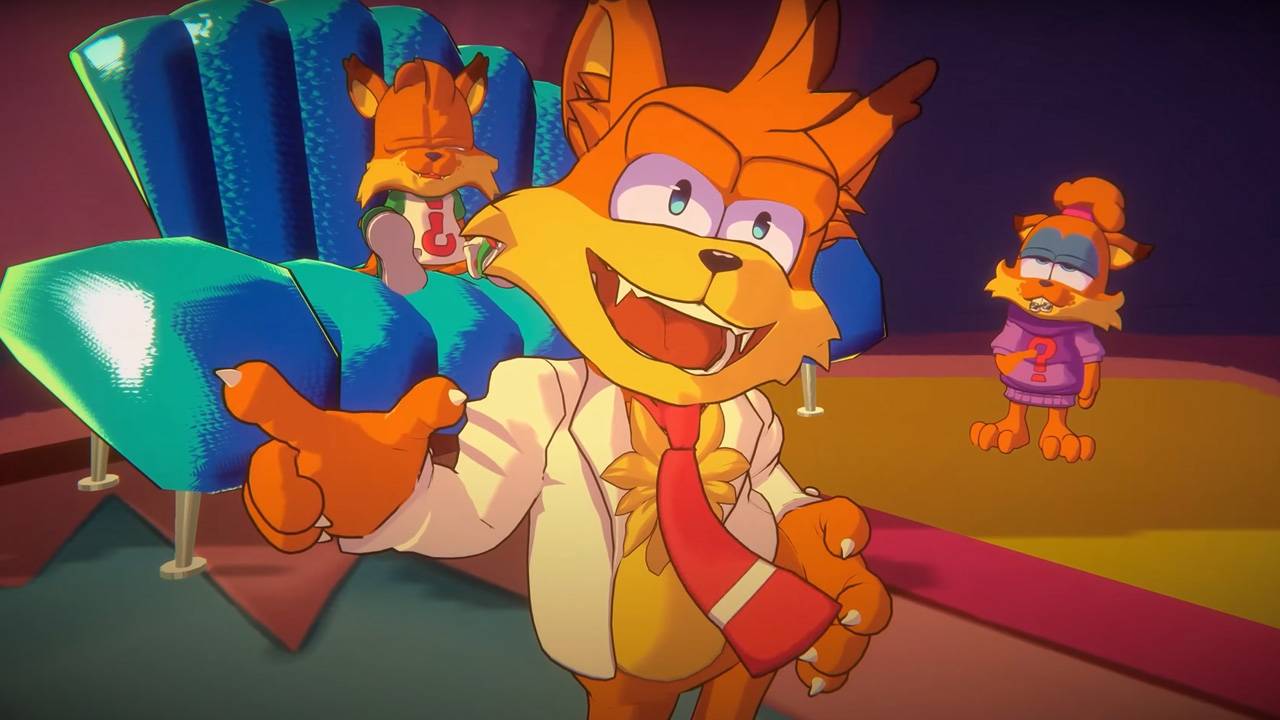
Bubsy has always been defined by his motor-mouth personality and his uncanny ability to stumble into trouble. In Bubsy 4D, the Golden Fleece has been stolen, but the culprit isn't the classic Woolies. Instead, Bubsy must face the Baabots—robotic, dystopian sheep creatures that have enslaved the Woolies. It is a simple, lighthearted setup that serves as a perfect vehicle for the game's exaggerated, cartoonish energy.
The writing leans heavily into self-aware humor, consistently breaking the fourth wall to acknowledge the series' infamous reputation. Whenever Bubsy mocks his enemies, asking if they intend to "AI generate a threat," the humor lands with surprising precision. However, as any fan of the original games knows, Bubsy is designed to talk—constantly. He will comment on the pause menu, the settings screen, and every minor platforming blunder. For some, this will be a charming callback to 1993; for others, the non-stop chatter will become physically exhausting within the first hour.
Platforming That Trips Over Its Own Feet
At its core, Bubsy 4D is a straightforward collect-and-reach platformer. You travel from planet to planet, navigating hazardous terrain to retrieve the Golden Fleece at the end of each stage. You are equipped with a suite of familiar moves: high-flying double jumps, a slow-descent glide, wall-running, and a "hairball" roll mechanic that allows for high-speed traversal.
In theory, these mechanics should create a fast, fluid, and expressive platforming experience. In practice, however, the game frequently trips over itself. The primary antagonist of your experience will be the camera. It is inconsistent, prone to clipping into walls, and makes judging distances for precision jumps incredibly difficult. Even with a projected shadow indicator—reminiscent of Crash Bandicoot 4—the wonky camera perspective makes landing on narrow platforms a gamble rather than a skill-based maneuver.
The Hairball Problem
The "hairball" rolling mechanic is perhaps the most divisive aspect of the movement suite. When it works, it feels smooth and provides a great sense of momentum. But far too often, the physics engine seems to lose its mind. Bubsy has a tendency to veer off-course or "jump" sideways when he should be traveling straight, leading to countless frustrating deaths. Unless the bobcat has been hitting the catnip-infused moonshine, there is no logical reason for his lack of directional stability.
2D vs. 3D: A Tale of Two Games
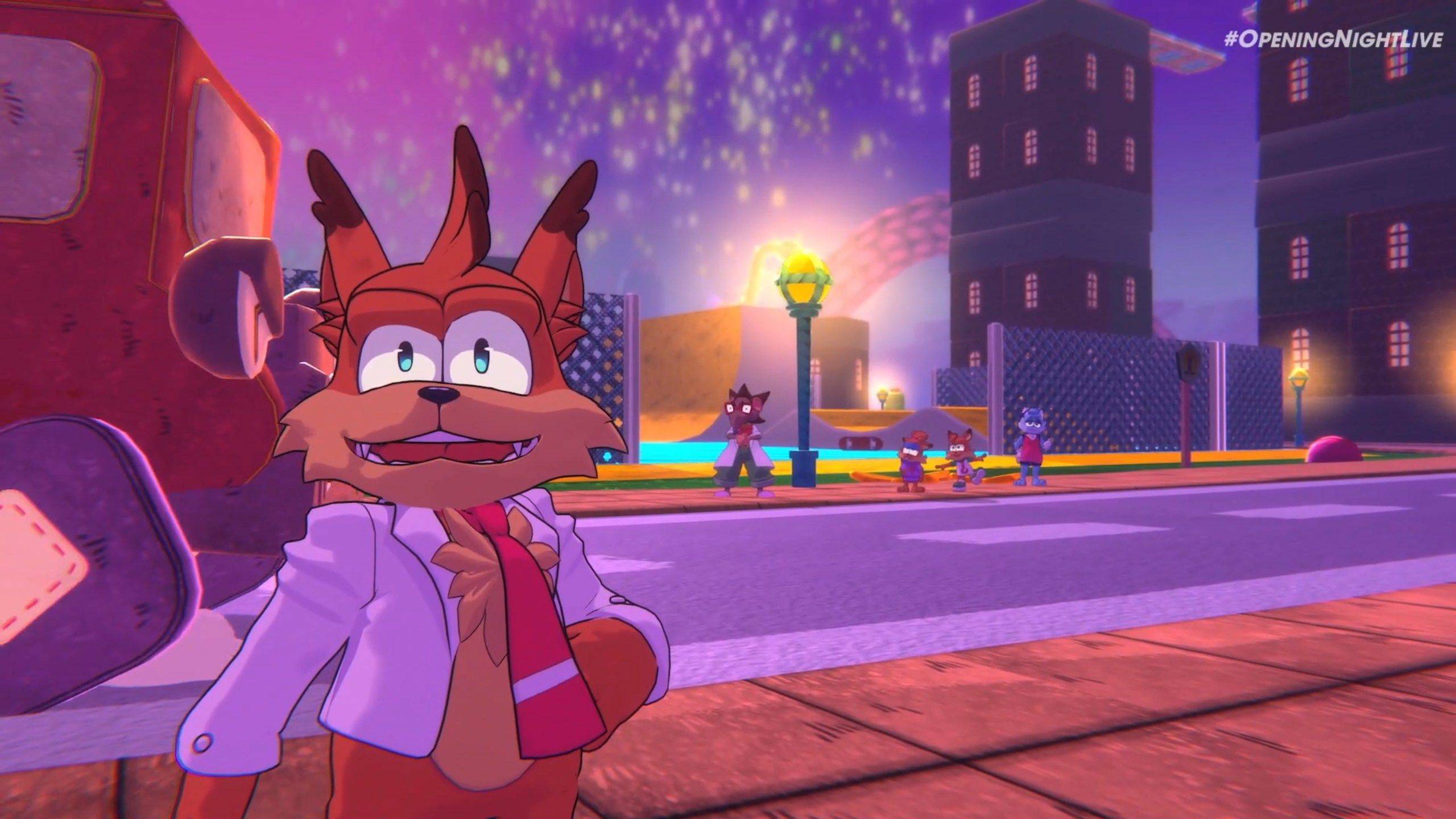
The most shocking revelation in Bubsy 4D is that the 2D sections—which appear intermittently throughout the adventure—are significantly better than the main 3D experience. These 2D stages are tight, readable, and devoid of the chaotic camera issues that plague the rest of the game. They feel like a different, more polished project entirely. Exploring these sections made me yearn for a full 2D Bubsy title instead of the ambitious, yet shaky, 3D world we received. It proves that the core platforming fundamentals are there; they are just currently buried beneath a layer of 3D camera and movement bugs.
Fortunately, the game is generous with checkpoints. These are represented as litterboxes, which is an endlessly amusing touch that cat owners will appreciate. You are never forced to trek long distances after a failure, which helps keep the momentum alive even when the controls start to feel floaty.
Visuals, Audio, and Performance
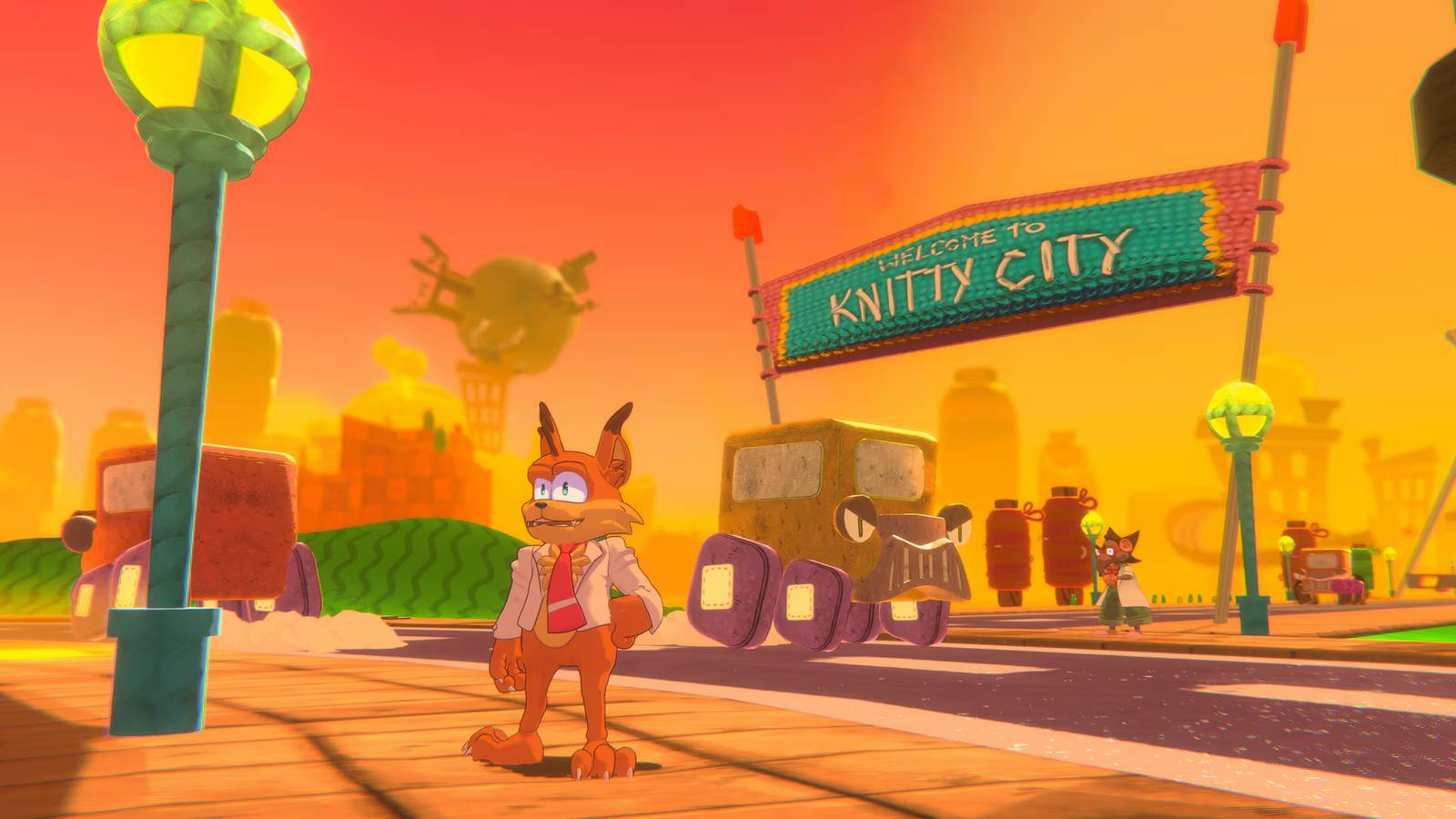
Visually, Bubsy 4D nails the late-90s mascot energy. The vibrant, colorful planets and exaggerated, rubber-hose animations feel like a deliberate homage to the PlayStation 1 and 2 era. The art style is consistent, readable, and overflowing with personality. It doesn't aim for photorealism, and that is to its benefit—it looks exactly like a modern re-imagining of a classic platformer.
The sound design, unfortunately, is quite forgettable. While the music attempts to capture a funky, old-school platformer vibe, it lacks the iconic hooks of the genre's best. The environmental audio is generic, and the character barks—while occasionally funny—mostly blend into the background noise. On the technical side, the performance on the PlayStation 5 is generally stable. We didn't encounter any game-breaking crashes, though minor visual glitches and odd transition stuttering during high-speed segments are common.
| Category | Verdict |
|---|---|
| Visual Presentation | Vibrant, nostalgic, and true to the series identity. |
| Platforming Mechanics | Inconsistent; 3D movement feels floaty and imprecise. |
| Camera Control | Aggressively wonky; makes platforming harder than it needs to be. |
| Audio/Music | Generic and forgettable; lacks memorable melodic hooks. |
Final Verdict: A Rough Landing for the Bobcat
As a fan of mascot platformers who still has the physical merchandise on my desk, I genuinely wanted Bubsy 4D to be the triumphant return we’ve been waiting thirty years for. A lot is right on the surface: the personality is there, the vibrant art style fits the legacy perfectly, and the self-aware humor genuinely lands more often than not. However, it is all severely undercut by unreliable camera systems and frustratingly inconsistent physics.
History seems to be repeating itself. Much like his predecessors, Bubsy struggles to compete with the genre's current titans—games like Crash Bandicoot 4: It’s About Time or the modern Super Mario entries—which offer far tighter, more polished controls. There were flashes of brilliance where I was genuinely having fun navigating the chaotic world, but for every moment of triumph, there were two moments of frustration. Bubsy 4D is a playable, nostalgic experience, but it never manages to turn into something you would consistently recommend to anyone other than the most die-hard fans of the bobcat's legacy.