THE LEGEND OF KHIIMORI: A CINEMATIC ODE TO THE WIND AND THE ENDLESS STEPPE
The Legend of Khiimori Early: A Bold, Unpolished Equestrian Adventure in 13th-Century Mongolia
Originality is a rare and highly commendable feat in modern video game development. Seeing a studio actively attempt to forge something completely new and culturally distinct almost always brings a smile to my face. However, innovative ideas and fresh approaches must eventually be backed by mechanical quality and technical polish, or the entire ambitious structure risks collapsing under its own weight. The Legend of Khiimori, currently in early access, serves as a textbook example of this exact development struggle.
Imagine an open-world adventure where you play not as a world-saving warrior, but as a humble courier navigating the sprawling, untamed steppes of Mongolia during the 13th century. The overarching theme and historical setting are undeniably intriguing. This specific era and culture are rarely explored in video games, and when they are—such as in the critically acclaimed Ghost of Tsushima—the Mongols are almost exclusively depicted as the ruthless antagonists. I struggle to recall another prominent video game that positions the Mongolian people as the heroes, offering players an intimate, authentic look into their rich nomadic culture and deep connection with nature.
Developed by Aesir Interactive, The Legend of Khiimori aims to let you experience exactly that. However, based on the several hours I spent exploring this early access build, the journey from an incredible concept to a fully realized game is still going to be a very long, bumpy ride. Here are my comprehensive early access impressions.
The Burden of Early Access: Content Limitations and Fetch Quests
It is always a delicate balancing act to review an early access title. It is inherently unfair to judge a work-in-progress as a finished product, but as a consumer product currently available for purchase, evaluating the present experience is necessary. Right out of the gate, two glaring issues immediately present themselves: a severe lack of overall polish and a profound lack of creativity in the quest design.
Naturally, this early access version does not feature the complete story campaign. In fact, it feels as though there is virtually no overarching narrative present at all right now. The full, immersive story mode is slated for the 1.0 release. In the meantime, players are left with a thinly veiled collection of repetitive fetch quests. The current gameplay loop is aggressively basic: you are tasked to travel to a designated point, plan your route across the terrain, gather specific materials, craft an item, and deliver it.
Will this structural monotony evolve once the full version launches? We can certainly hope so. If the final narrative and quest design remain at this superficial level, it will completely undermine the incredible world the developers have built.
Gameplay Mechanics: The Deep Art of Horse Management
While the quest design currently falters, the core gameplay mechanics show immense promise. If this early build is any indication, the final product will offer a deeply engaging and unique simulation experience. The Legend of Khiimori features a massive open world populated with diverse flora and fauna, multiple distinct biomes, active hunting mechanics, and a complex system for breeding and owning horses.
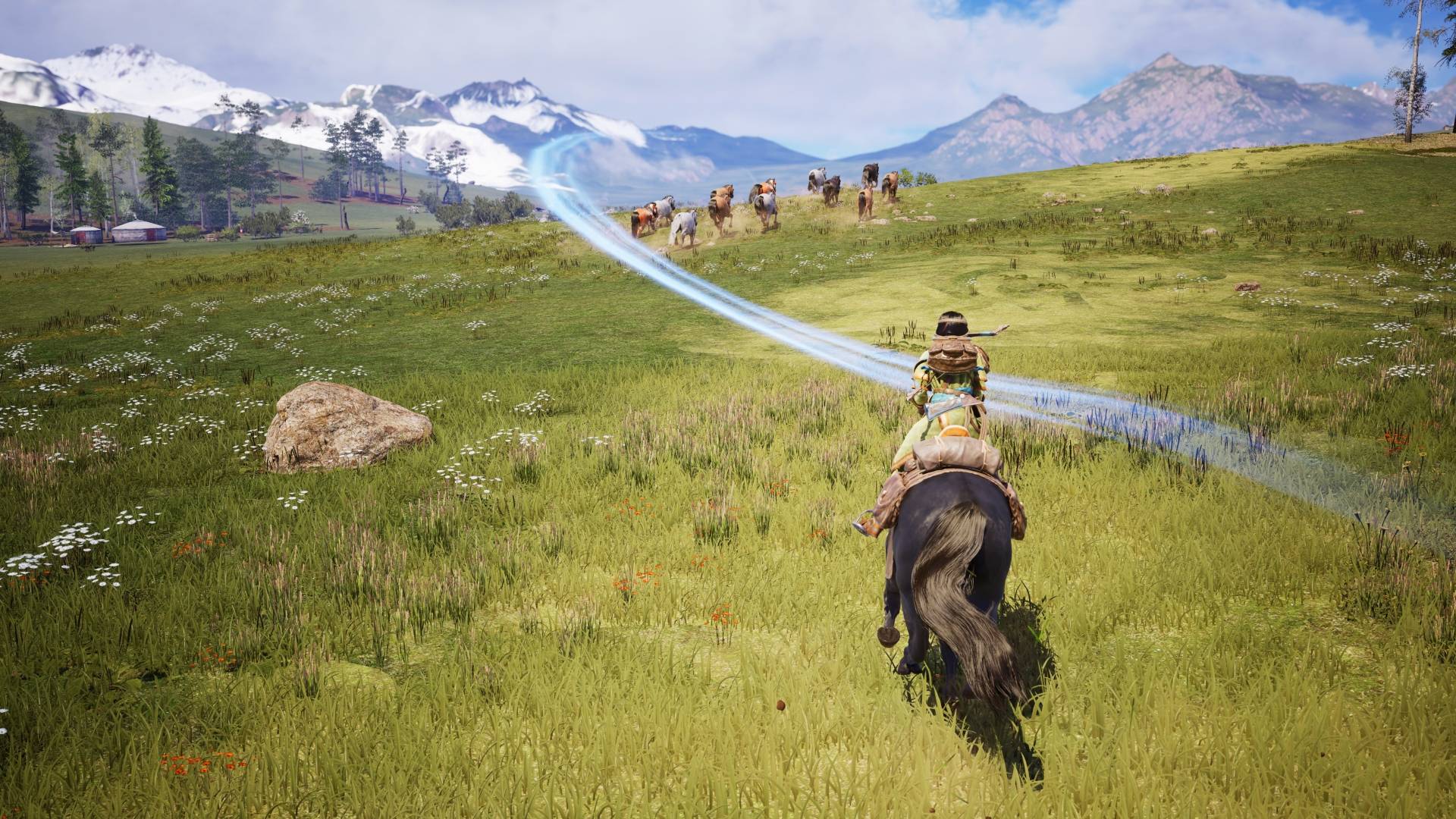
You step into the boots of Naraa, a young, ambitious Mongolian equestrian striving to find her place under the vast Mongolian sky. As a dedicated courier, she honors her tribe's traditions by aiding her people across the treacherous landscape. In this game, your primary companion, vehicle, and lifeline is your horse. From the back of your steed, you will traverse the world, gather crafting materials, and wield a traditional bow and arrow to fend off the aggressive wildlife of the 13th-century steppes.
A Simulator-Level Equestrian Experience
Do not expect the arcade-style, push-button-to-gallop horse mechanics found in The Witcher 3 or Skyrim. Horse management in The Legend of Khiimori is a complex, demanding gameplay pillar. You must constantly monitor your mount's stamina, hunger, and thirst levels. Riding recklessly into jagged rocks, dense thorn bushes, or steep drops will physically injure the animal. Not only does this break your heart to see your companion suffer, but an injured horse drastically slows your progression and limits your carrying capacity.
The game allows you to own and stable multiple horses (the current early access cap is four). Different breeds offer distinct advantages and disadvantages, forcing you to carefully select the right horse for the specific terrain and distance of your next delivery. Furthermore, both the horses and Naraa feature dedicated RPG-style skill trees, allowing you to unlock new riding techniques, survival skills, and bonding abilities.
- Dynamic Control Schemes: Players can choose between a traditional, simplified riding scheme or an advanced, complex control layout designed for hardcore equestrian simulation fans. Using a controller, you steer with the thumbsticks while actively managing your galloping speed with the shoulder buttons, constantly balancing velocity against your horse's rapidly draining stamina bar.
- Survival Mechanics: If the horse's hunger, thirst, or stamina gauges completely empty, it begins losing health. You are required to actively stop during your journeys, allowing your horse to graze on patches of grass and drink from discovered water sources.
- Cargo Balancing: Perhaps the most innovative and stressful mechanic is the cargo balance system. When loading your horse with delivery goods or gathered materials, you must physically distribute the weight evenly across the saddlebags. If the cargo is unbalanced, your horse will stumble, lose speed, and potentially fall, damaging both the animal and your precious cargo.
If reading about all these intertwined systems feels overwhelming, playing it can be equally taxing. You will always have your hands full just keeping your horse alive and moving. However, when you master these systems, the bond you feel with your digital mount is unparalleled in the gaming space.

Graphics, Audio, and Performance: The Unreal Engine 5 Paradox
The Legend of Khiimori is built on the highly touted Unreal Engine 5, a fact that inherently carries massive expectations regarding visual fidelity. So, is this a graphically stunning next-generation showcase? The straightforward answer is: no, it is not. But the reality is a bit more complicated.
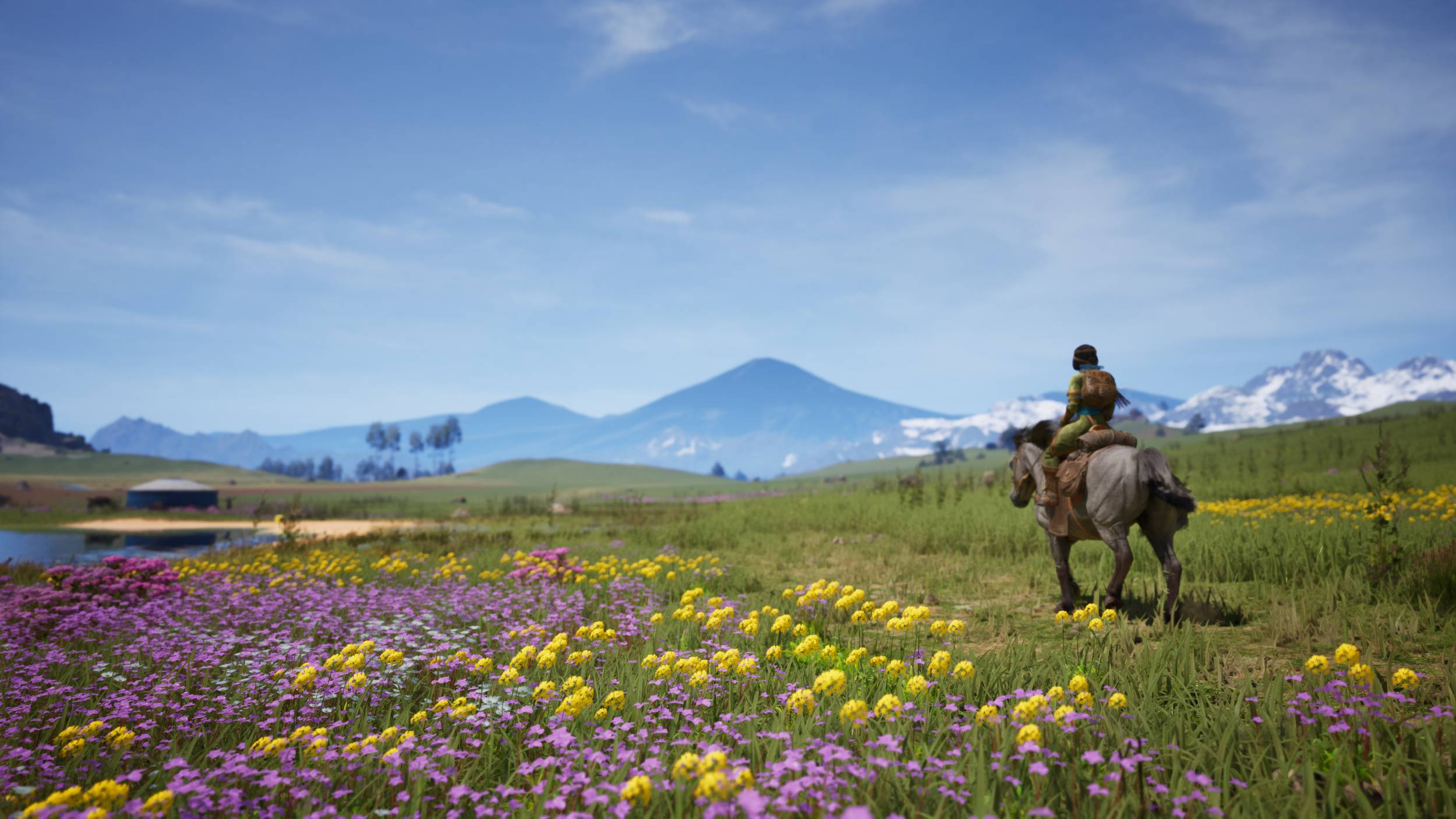
The game absolutely has its moments of visual brilliance. When you are cresting a hill and gazing out over the sprawling, untouched Mongolian vistas, the lighting and scale can be breathtaking. The macro-level design of the open-world biomes is highly impressive. However, the moment the camera zooms in for a cutscene or tight character interaction, the illusion shatters completely.
The Micro Flaws
The character face models are shockingly poor, looking several generations out of date. During dialogue sequences, the stiff animations and lack of facial expression severely hinder any emotional connection you might form with the characters. Environmental textures up close often appear muddy, and the color grading feels strangely washed out, particularly during dynamic weather events like heavy rainstorms.
The voice acting shares this lack of professional polish. Whether you are listening to the English dub or the native language tracks, the delivery feels incredibly stiff and forced, lacking the natural, conversational flow found in modern AAA titles.
A Masterful Soundtrack
Where the voice acting falters, the musical score triumphs. The soundtrack is an absolute masterpiece. Featuring soaring, traditional Mongolian instrumentation, throat singing, and rhythmic percussion, the music perfectly encapsulates the atmosphere of the nomadic lifestyle. Galloping across the steppes while this epic score swells in the background is easily the highlight of the current game.
On the performance front, the early access build is highly erratic. Running the game on a high-end PC, the framerate comfortably hovered above 80 FPS during general exploration. However, the engine suffers from severe, inexplicable optimization drops, occasionally plummeting below 30 FPS in areas that are not particularly graphically demanding. These optimization hiccups are a clear indicator that the development team has a lot of under-the-hood tightening left to do.
Technical Specifications at a Glance
| Category | Details |
|---|---|
| Game Title | The Legend of Khiimori |
| Developer | Aesir Interactive |
| Genre | Open-World / Equestrian Survival / Adventure |
| Engine | Unreal Engine 5 |
| Current State | Early Access |
Final Verdict: A Diamond Deep in the Rough
In its current early access state, The Legend of Khiimori feels like a passion project torn aggressively between bold, industry-shifting ambition and frustratingly uneven execution. Its unique cultural focus, breathtaking setting, and deep mechanical complexity—specifically surrounding its equestrian simulation systems—are genuinely refreshing and unlike almost anything else available on the market today. You can tangibly feel the passion and respect the developers have for the source material, and when the survival and riding systems click into place, the game hints at something truly extraordinary.
That being said, consumers must approach this early build with extreme caution. The weak, repetitive quest design, noticeable lack of visual polish on character models, and erratic technical performance hold the experience back significantly.
If Aesir Interactive can utilize this early access period to meaningfully expand the narrative, refine the punishing mechanics, and optimize the Unreal Engine 5 performance, The Legend of Khiimori has the potential to grow into a standout, genre-defining experience. Until that day arrives, it remains a fascinating, deeply fragile title—one overflowing with undeniable promise, but still very much a rough work in progress.