SCREAMER: THE NEON-FUELED FIESTA OF SPEED AND DESTRUCTION
Screamer: Milestone’s Cyberpunk Combat Racer Revives the Spirit of Blur
If you have been yearning for the golden age of combat arcade racing—the era defined by the chaotic vehicular warfare of Blur and the explosive set pieces of Split/Second: Velocity—you are not alone. For years, the genre has been starved of meaningful new entries, with traditional simulation racers or pure arcade drifters dominating the market. Enter Milestone’s Screamer, released in March 2026. This isn't just a nostalgic nod to the past; it is a bold, anime-infused reinvention of a long-dormant MS-DOS franchise from 1995.
Available on PlayStation 5, Xbox Series X|S, and PC, Screamer blends breathtaking neon-lit cyberpunk aesthetics with hypercar combat and a surprisingly steep mechanical learning curve. But does it manage to capture the lightning-in-a-bottle magic of its spiritual predecessors, or does it stall on the starting line? Here is our comprehensive review of Milestone’s latest high-speed endeavor.
A Dystopian Narrative Wrapped in Anime Aesthetics
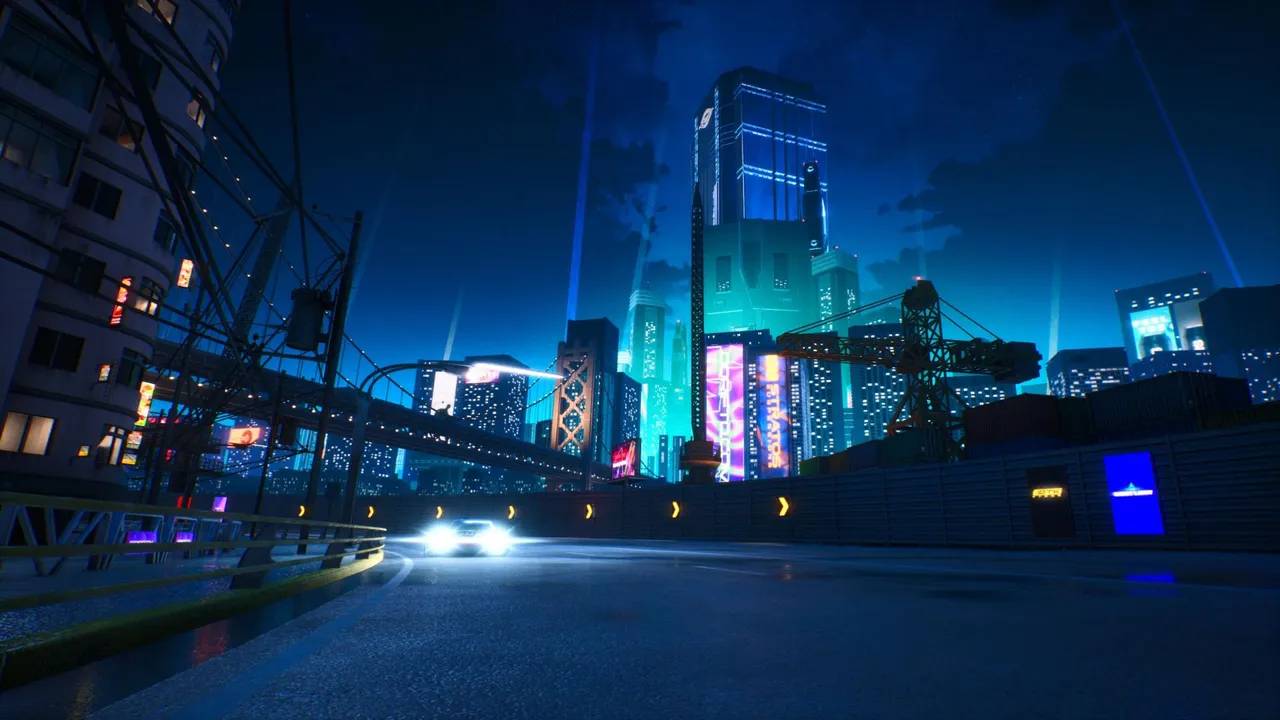
Most arcade racers treat their narratives as an afterthought, a mere excuse to get you from menu to track. Screamer, however, leans heavily into its storytelling. Set in a gritty, neon-drenched dystopian metropolis, the game throws you into "The Tournament," a high-stakes underground racing league where drivers battle for survival, prestige, and a life-changing sum of money.
The campaign is elevated by brilliantly animated, high-quality cutscenes that feel ripped straight from a premium sci-fi anime. The 3D anime model hybrid system Milestone utilizes here is exceptionally polished. It seamlessly blends hyper-realistic environments and lighting with stylized character designs. At times, the cutscenes and unique dialogue screens make you feel like you are actively playing through an interactive season of Cyberpunk: Edgerunners or Initial D.
Gameplay Mechanics: Mastering the Twin-Stick Drift
The most polarizing and ultimately rewarding feature of Screamer is its twin-stick racing mechanic. If you have played the indie darling Inertial Drift, you will feel right at home. For the uninitiated, twin-stick racing demands that you use the left analog stick to steer the vehicle and the right analog stick to control your drift angle and car rotation.
Initially, this control scheme feels like trying to pat your head and rub your belly at 200 km/h. It requires a complete rewiring of your muscle memory. You will crash. You will spin out. But once it clicks, it represents some of the most satisfying driving mechanics in modern arcade racing. Throwing a hypercar sideways into a hairpin turn, using the right stick to feather your angle away from a concrete barrier, is a uniquely thrilling experience that standard single-stick steering simply cannot replicate.
Vehicular Warfare: Combat, Sync, and Abilities
While the drifting is sublime, Screamer is ultimately a combat racer. The game equips you with four primary tactical abilities: Boost, Shield, Strike, and Overdrive. Managing these tools is just as important as maintaining your racing line.
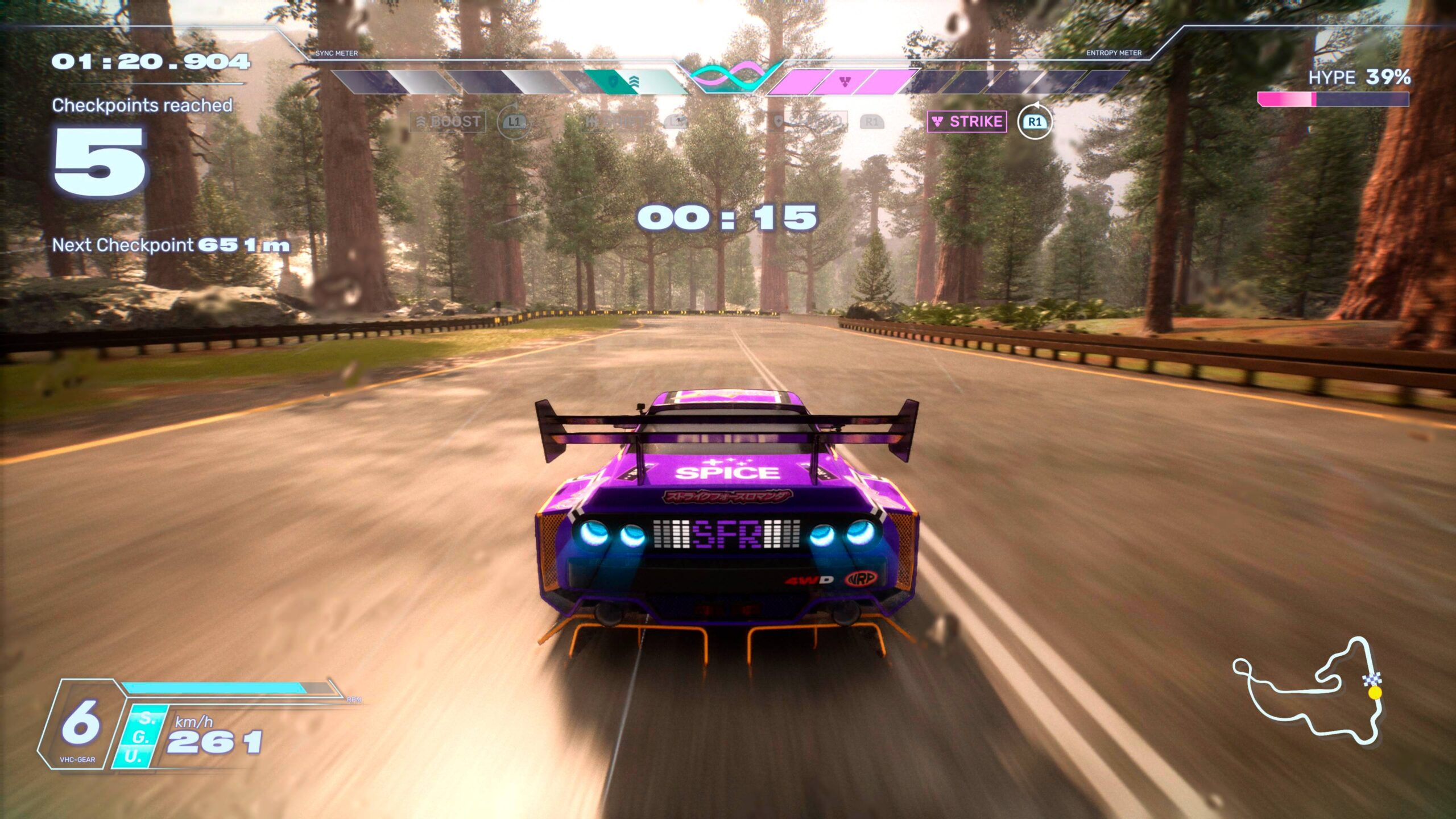
Unlike Mario Kart where item pickups dictate the flow of the race, Screamer relies on the "Sync" mechanic. Your abilities are tied to a meter that charges based on your driving performance. This is where the game introduces the ECHO System—a forced semi-automatic gear-shifting mechanic. Hitting a "perfect shift" fills your meter significantly faster. Once charged, you must make split-second decisions: do you use the energy to boost past a rival, deploy a shield to absorb an incoming strike, or unleash Overdrive to aggressively take down the leader?
The AI in Screamer deserves a special commendation. Milestone has successfully avoided the dreaded "rubberbanding" effect that plagues so many modern racers. If you drive flawlessly, you will pull ahead and stay ahead. However, the AI is deeply aggressive. In your early hours, you will likely find yourself frustrated as rival racers constantly bump, strike, and shunt you off the neon-lit tracks. But as you master the timing of your shield and learn to counter-attack with the strike ability, the combat evolves into a highly strategic, high-speed chess match.
The ECHO System: A Divisive Design Choice
While the Sync mechanic adds a layer of skill expression, the underlying ECHO system is a double-edged sword. Because the game relies on semi-automatic gear shifts to generate combat energy, players are forced to manually shift gears to succeed. Missing a shift doesn't just cost you a fraction of a second; it deprives you of the combat resources necessary to survive the aggressive AI.
The fatal flaw here is the lack of accessibility. Screamer does not allow you to turn off the ECHO system to opt for a fully automatic transmission. In an era where gaming accessibility is paramount, forcing manual shifting in an already complex twin-stick combat racer can feel overwhelming. Casual players who just want to enjoy the visuals and blow up rival cars may find themselves alienated by the demanding multitasking required to stay competitive.
The Fatal Flaw: Where is the Sense of Speed?
If there is one glaring issue that holds Screamer back from true greatness, it is the lackluster sense of speed. When you are piloting a futuristic hypercar down a neon-drenched highway at 250+ km/h, your heart should be in your throat. You should feel the raw, terrifying velocity tearing past the camera.
Unfortunately, Screamer often feels like you are cruising at a leisurely 100 km/h. The camera Field of View (FOV) is relatively static, the motion blur implementation is surprisingly conservative, and there is a distinct lack of camera shake or environmental wind effects. In a combat arcade racer, a visceral sense of speed is mandatory. It not only makes the game more exhilarating, but it naturally increases the difficulty by shrinking your reaction windows. By failing to communicate the raw speed of these machines, the game occasionally feels floaty and disconnected, robbing the player of the adrenaline rush the genre is known for.
Graphics, Performance, and Audio
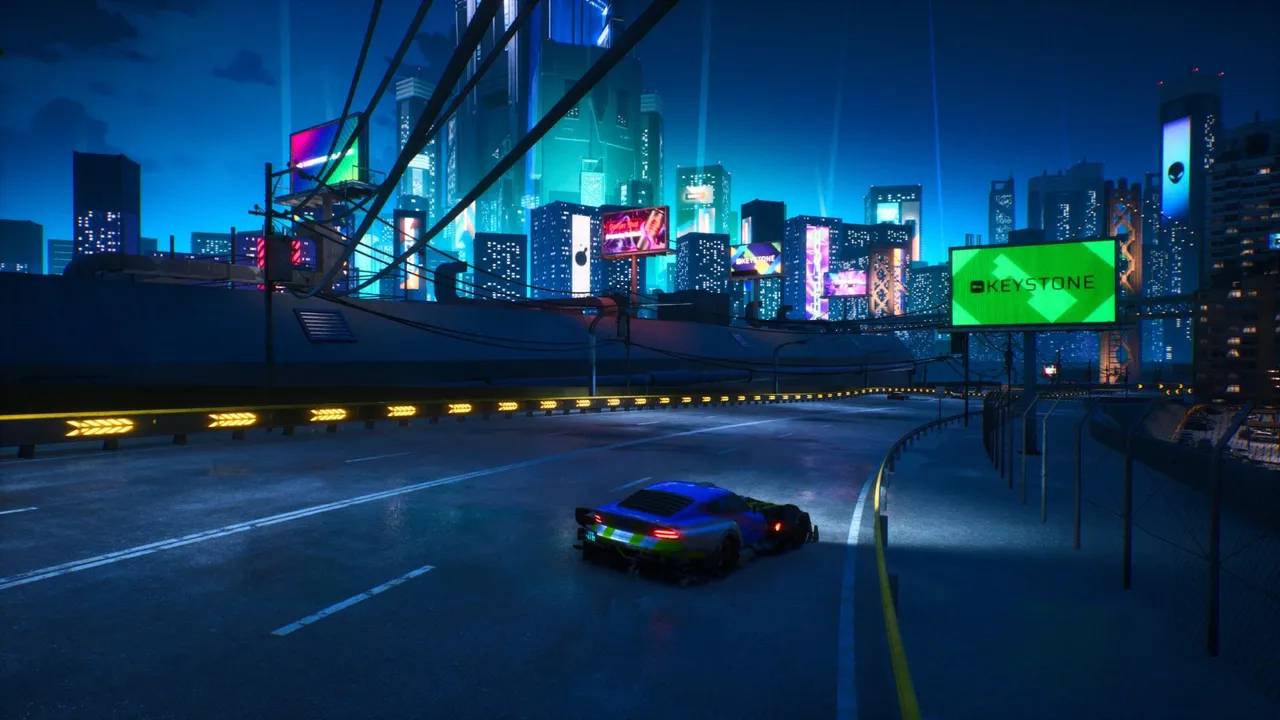
Playing on the PlayStation 5, Screamer is an absolute technical delight. Milestone’s proprietary engine scales beautifully, offering a rock-solid framerate that never dips, even when the screen is cluttered with explosions, neon light trails, and particle effects. The track design is varied and gorgeous, perfectly capturing the gritty, rain-slicked cyber-aesthetic that sci-fi fans adore.
The audio design works overtime to compensate for the visual lack of speed. The roaring engines sound ferocious, and the combat impacts carry a heavy, satisfying bass. Tying it all together is an incredible, upbeat cyberpunk-inspired soundtrack heavy on synthwave and drum-and-bass. The music perfectly elevates the tension of the races and keeps you pumped from the starting grid to the finish line.
The Final Verdict
Screamer is a fascinating, highly stylized hybrid that successfully carves out its own niche in the racing genre. It takes immense risks with its twin-stick driving mechanics and anime-driven narrative, and for the most part, those risks pay off. Milestone has crafted a world that is a joy to look at and a combat system that rewards high-skill, strategic driving without relying on cheap AI rubberbanding.
However, it falls just short of perfection. The inability to disable the manual-shifting ECHO system limits its accessibility, and the disappointing sense of speed prevents the hypercars from feeling truly dangerous. If you are a fan of the original 1995 MS-DOS Screamer, this game shares nothing with it but a name. But if you have been waiting for a worthy successor to Blur, or if you loved the twin-stick mechanics of Inertial Drift, Screamer is a must-play.
It is a demanding, stylish, and deeply rewarding combat racer that demands your full attention. Just be prepared to miss a few shifts while you learn how to drift.
- Pros: Incredible anime/cyberpunk art direction, deeply rewarding twin-stick drift mechanics, strategic combat with no rubberbanding AI, fantastic soundtrack.
- Cons: Forced manual shifting (ECHO system) alienates casual players, severely underwhelming sense of speed.
- Platforms: PS5, Xbox Series X|S, PC
- Release Date: March 26, 2026