Shinonome Abyss: The Maiden Exorcist Review – A Unique Roguelike Horror Game Built Around Sound, Strategy, and Survival
Meta Description: Shinonome Abyss: The Maiden Exorcist is a tense roguelike horror game where sound becomes your strongest weapon. Explore Yono’s exorcist journey, mononoke encounters, survival strategy, inventory pressure, dungeon exploration, puzzle-like combat, and why headphones are essential for this indie horror experience.
Shinonome Abyss: The Maiden Exorcist is not a typical action horror game. It does not ask players to run into rooms, slash monsters, collect loot, and become stronger through pure violence. Instead, it creates fear through silence, sound, uncertainty, and difficult choices. Developed as part of the Shinonome series, this indie roguelike horror game turns the player’s ears into one of the most important survival tools.
The game also carries extra interest because of the involvement of Kenichi Iwao, a name familiar to longtime survival horror fans. Iwao contributed to the early foundations of Capcom’s legendary Resident Evil series, and his return to horror through a smaller, more experimental project gives Shinonome Abyss a special identity. Rather than chasing modern blockbuster horror trends, the game focuses on tension, resource management, sound-based awareness, and the old-school fear of being underprepared.
For players searching for Shinonome Abyss review, The Maiden Exorcist game, best indie horror games, roguelike horror games, survival horror games, Japanese horror games, sound-based horror gameplay, PC game deals, Nintendo Switch horror games, cloud gaming, and video game deals, Shinonome Abyss: The Maiden Exorcist is one of the more unusual horror titles worth discovering.
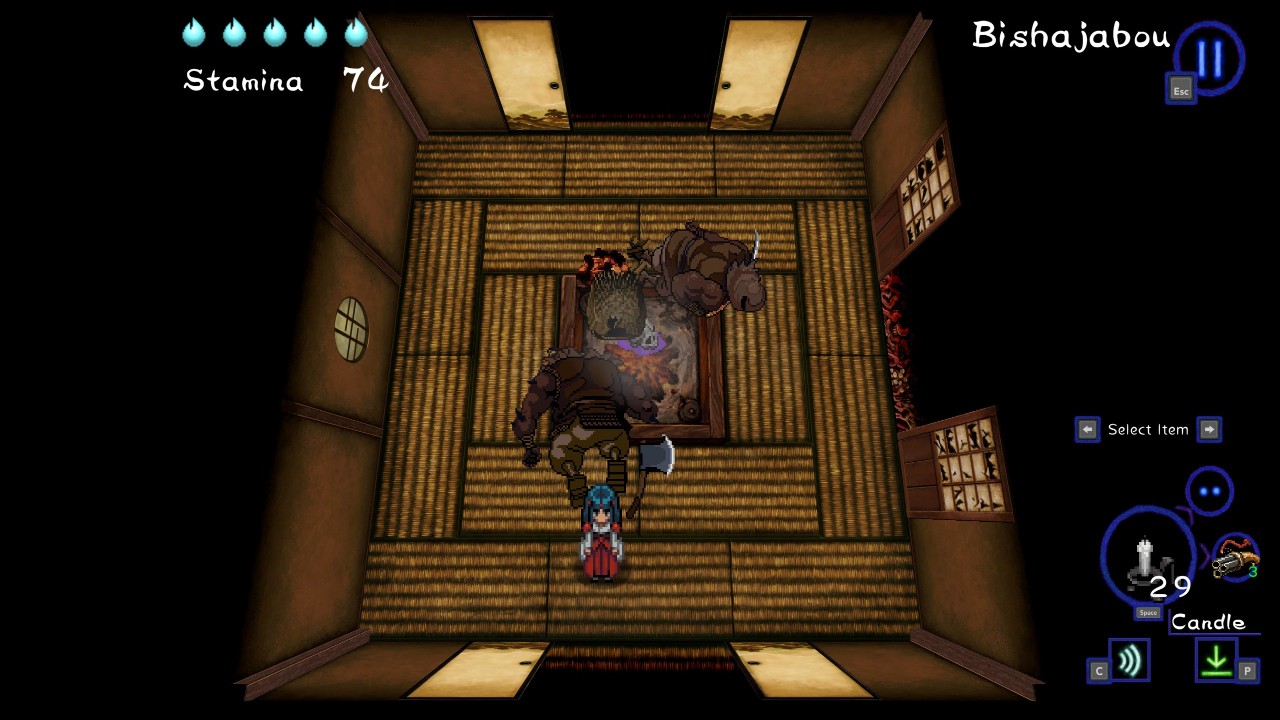
A Small Horror Game With a Strong Concept
Many horror games rely on obvious scares. They use loud noises, dark hallways, grotesque enemies, and sudden attacks to frighten players. Shinonome Abyss uses some of those tools, but its strongest idea is much smarter: you often survive by listening before acting.
The game places players in haunted houses filled with mononoke, traps, hidden rooms, and unpredictable threats. Instead of giving you a clear mini-map, enemy markers, or generous combat tools, it forces you to pay attention to every sound. Footsteps, whispers, scratching, chanting, shrieks, and strange environmental noises become warnings. If you ignore them, you may walk directly into death.
This makes Shinonome Abyss feel different from many roguelike games. It is not about building an overpowered character and clearing rooms through speed. It is about entering each space carefully, reading danger, deciding whether to fight, flee, lure, or avoid, and accepting that one wrong decision can end the run.
Yono: A Young Exorcist in a Dangerous World
Players take control of Yono, a young girl from a respected family of exorcists. Her older brother, a talented onmyoji, has suddenly disappeared, leaving Yono to step into a role she may not be fully ready for. Her first major task begins close to home, with an exorcism inside her own family apartment.
This setup immediately gives the game a personal feeling. Yono is not a powerful warrior or fearless demon hunter. She is vulnerable, inexperienced, and physically limited. That weakness is important because it shapes the entire experience. Players are not meant to dominate monsters in direct combat. They are meant to think like a desperate survivor using limited tools.
Yono’s vulnerability also makes the horror stronger. When every hallway may hide something stronger than you, even small movement choices feel important. Opening a door becomes a risk. Choosing to keep or discard an item becomes stressful. Moving through darkness becomes terrifying.
Sound Is Your Most Important Weapon
The defining feature of Shinonome Abyss: The Maiden Exorcist is its sound-based design. Headphones are not just recommended for atmosphere; they are almost essential for properly playing the game. The audio does not merely decorate the experience. It provides information.
Different monsters can be identified through sound. A sharp scream may warn you that a Gaki is nearby. A strange Buddhist chant may suggest that something far more dangerous is waiting behind a door. Scratching, footsteps, and other subtle noises can help you understand whether it is safe to proceed or whether you should prepare a trap.
This makes the game unusually tense. In many horror games, players react after seeing the enemy. In Shinonome Abyss, the strongest players react before seeing it. They listen, interpret, plan, and survive.
That design makes every room feel dangerous. Even silence becomes suspicious. If you hear nothing, does that mean the path is clear, or is something waiting quietly? The game turns uncertainty into pressure, and that pressure is where its horror truly lives.
Combat Is More Like a Puzzle Than a Fight
Players expecting fast action may be surprised by how weak Yono feels in direct combat. She cannot simply rush monsters and destroy them. She cannot run like an action hero, and her starting equipment is painfully limited. In many situations, fighting directly is the worst possible choice.
At the beginning of a house, Yono may have only an old gun with a few bullets and a tiny inventory. Even the gun is not a reliable solution. It does limited damage against larger monsters, and reloading is not automatic. If you want to reload, you must switch to the ammo and load bullets manually. Under pressure, that process becomes terrifying.
Because direct combat is risky, players must use the environment. You may place a trap near a doorway, call out to lure a monster, and then retreat. You may lead enemies into fire or use room layouts to create distance. You may choose to avoid a threat entirely if the cost of fighting is too high.
This makes combat feel more like a puzzle. The question is rarely “Can I kill this monster?” The better question is “Can I survive this encounter with the tools I have?”
Inventory Pressure Makes Every Item Matter
One of the strongest survival horror elements in Shinonome Abyss is its limited inventory. Every item slot matters. You cannot carry everything. You must choose between tools, weapons, ammo, candles, charms, and other survival items.
That creates painful decisions. Do you keep a candle so you can see in a dark room? Do you hold onto a protective charm that may save you later? Do you carry extra ammo even if the gun is weak? Do you throw away something useful now to make space for something that might be important later?
The best horror games make ordinary decisions feel heavy, and Shinonome Abyss understands that. Dropping an item is not just inventory management. It is a gamble. You may forget about it, regret it, or die because of it later.
This kind of tension recalls classic survival horror. The fear does not only come from monsters. It comes from scarcity, planning, and the knowledge that your own choices may create your downfall.
Three Modes With Different Challenges
Shinonome Abyss: The Maiden Exorcist includes three main modes, each offering a different style of challenge.
Harai uses fixed house layouts. This mode rewards learning, memory, and planning. Players can gradually understand room placement, enemy positions, item locations, and the best ways to move through the building. It feels more like a carefully designed puzzle where repeated attempts help you build a strategy.
Misogi is closer to traditional roguelike design. Rooms are generated more randomly, items are unpredictable, and players must adapt to whatever the game gives them. This mode creates stronger replayability because each run can feel different.
Gyou takes the Misogi structure and increases the difficulty dramatically. This mode is made for players who want a harsher, more punishing experience. It is not the best starting point for newcomers, but it gives skilled players a true test of patience and decision-making.
Why Shinonome Abyss Feels Refreshing
The most refreshing thing about Shinonome Abyss is that it does not try to make players feel powerful. Many roguelike games eventually turn the player into a destructive force through upgrades, weapons, and synergies. Shinonome Abyss takes a different path. It keeps the player vulnerable and asks them to become smarter instead of stronger.
This makes the game more thoughtful than expected. Every encounter demands observation. Every item matters. Every sound can change your decision. Every room becomes a small tactical problem.
That slower, more careful rhythm may not appeal to everyone, but it gives the game a strong identity. It is not trying to compete with action-heavy roguelikes. It is trying to create a horror roguelike where fear comes from listening, planning, and surviving with almost nothing.
Not Everyone Will Have the Patience
Shinonome Abyss is intentionally demanding, and that means some players may bounce off it. The game requires patience, careful listening, repeated failure, and acceptance of loss. If you want fast combat, flashy upgrades, or constant action, this may not be the right horror game for you.
The roguelike structure also means death can be frustrating. Losing items, progress, and a promising run is part of the experience. For some players, that creates tension and replay value. For others, it may feel punishing.
The game’s slower pace is also part of its personality. You must move carefully. You must listen. You must think. That design is excellent for players who enjoy survival horror puzzles, but less ideal for anyone who wants immediate action.
A Familiar House With New Fear
Some players may also feel that parts of the game look familiar, especially if they played earlier Shinonome titles. The setting and structure may not always feel completely new, and the game’s modest scale means it cannot offer the variety of a large-budget horror release.
However, the expanded content helps. More mononoke, more traps, more items, more dungeon variation, and the addition of Yono’s mysterious second personality give this entry more depth than its predecessor. It may still be a small indie horror game, but it has a clearer and more complete identity.
Who Should Play Shinonome Abyss?
Shinonome Abyss: The Maiden Exorcist is best suited for players who enjoy slow-burn horror, survival strategy, roguelike tension, Japanese folklore, and unusual gameplay systems. It is especially recommended for players who like horror games that make them feel vulnerable rather than powerful.
If you enjoyed classic survival horror inventory pressure, dungeon exploration, trial-and-error planning, or sound-based tension, this game has a lot to offer. If you mainly want action, combat, and fast progression, it may feel too slow or too restrictive.
Final Thoughts
Shinonome Abyss: The Maiden Exorcist is a small but memorable horror game with a strong central idea: your ears may save your life. By building its tension around sound, limited resources, environmental traps, and careful planning, it offers something different from most modern roguelike horror games.
Yono’s weakness is not a flaw. It is the foundation of the experience. Because she cannot easily fight, players must think, listen, lure, sacrifice, and survive. That makes every decision feel meaningful.
For players searching for Shinonome Abyss review, The Maiden Exorcist, best indie horror games, roguelike survival horror, Japanese folklore games, sound-based horror games, Nintendo Switch horror games, PC game deals, cloud gaming, game subscription services, and video game deals, Shinonome Abyss is worth considering if you want a tense, clever, and unusual horror experience.
It may not be for everyone, but for patient players who enjoy fear built from sound and strategy, Shinonome Abyss: The Maiden Exorcist delivers a haunting experience that lingers after the headphones come off.