Saros Review Analysis: Why Housemarque’s Returnal Follow-Up Feels Less Bold Than It Should
Meta Description: Explore why Saros, Housemarque’s spiritual successor to Returnal, struggles with its roguelike identity. This deep analysis covers gameplay systems, build variety, difficulty balance, story structure, PS5 action games, third-person shooters, roguelike design, and what made Returnal so memorable.
Saros, the spiritual successor to Returnal, arrives with enormous expectations. Housemarque earned major praise with Returnal by blending bullet-hell chaos, third-person shooting, atmospheric science fiction, and roguelike structure into one of the most distinctive PS5 games of its generation. Naturally, many players expected Saros to push that formula even further.
Instead, Saros feels like a game caught between two identities. It still carries roguelike elements, but it often seems hesitant to fully embrace them. It wants the replayability, tension, and mystery of a roguelike, yet it strips away many of the systems that made Returnal feel dangerous, unpredictable, and mechanically rich. The result is a smoother, more approachable experience, but also one that feels less daring and less memorable.
For readers searching for Saros review, Returnal comparison, best PS5 games 2026, roguelike games, third-person shooter games, Housemarque games, PlayStation exclusives, gaming PC deals, cloud gaming, and video game deals, Saros is an interesting case study in what happens when a developer tries to make a demanding genre more accessible without preserving the depth that made it compelling.
Housemarque’s Shift From Arcade Action to Returnal
Housemarque built its reputation on arcade-style action games filled with speed, particles, explosions, and precision. Titles like Resogun and Nex Machina showed the studio’s love for intense screen-filling chaos. But after years of working in that space, Housemarque famously declared that “arcade is dead” and moved toward more ambitious genres.
Returnal became the result of that shift. It took the studio’s arcade instincts and placed them inside a roguelike third-person shooter. The game followed Selene, a stranded astronaut trapped on the alien planet Atropos, forced to repeat a deadly cycle again and again. Every run offered new rooms, weapons, items, parasites, malfunctions, and opportunities for risk or reward.
Returnal worked because its gameplay structure and story supported each other. The roguelike loop was not just a mechanical feature. It was part of the narrative. Selene’s endless repetition reflected guilt, trauma, obsession, and punishment. The game’s structure made its themes stronger.
Saros Has Roguelike Elements, But Less Roguelike Soul
Saros technically includes roguelike features. Its levels cycle threats, weapons, resources, and perks. Runs can change. Players face shifting challenges and make choices along the way. On the surface, that sounds like a natural evolution from Returnal.
However, the problem is not whether Saros contains roguelike elements. The problem is that it does not seem fully committed to them. Compared with Returnal, Saros removes or reduces many systems that gave each run texture. Returnal had shops, consumables, in-run currency, item fabricators, secret rooms, deceased scouts, parasites, malfunctions, resource statues, and strange trade-offs that encouraged experimentation.
Saros removes much of that complexity and does not replace it with equally interesting alternatives. Instead, it leans more heavily on a large skill tree filled with basic stat upgrades. That kind of progression can make a player stronger, but it does not create the same excitement as discovering unusual combinations during a run.
The Biggest Problem: Weak Build Variety
Great roguelikes thrive on build variety. The magic of the genre comes from finding tools that interact in surprising ways. In Slay the Spire, a poison build can become unstoppable. In Hades, a weapon and boon combination can completely change combat rhythm. In Balatro, a strange Joker setup can explode into absurd power.
Saros rarely reaches that level of excitement. It has strong abilities, but it does not create many strong builds. That distinction matters. A powerful ability can make the player feel temporarily dominant, but a powerful build makes the player feel clever. It rewards planning, adaptation, and creativity.
The perk pool in Saros is too limited and offers too little synergy. Weapons also feel too narrow in variety, which reduces the chance of discovering new playstyles. As a result, many runs feel similar. The player may become stronger, but not necessarily more inventive.
This is where Saros loses one of the core pleasures of roguelike design. The best games in the genre make players think, “What strange combination can I create this time?” Saros too often asks, “How much stronger are my stats now?”
Accessibility Is Not the Real Problem
It is easy to misunderstand the criticism. Saros is not weaker because it tries to be more approachable. Making roguelikes more accessible is a good goal. Many modern roguelikes include difficulty modifiers, assists, permanent upgrades, or optional systems that help more players enjoy the genre.
Games like Hades used God Mode to make repeated failure less punishing. Other roguelikes include difficulty settings, assist modes, or flexible progression systems. These features can welcome new players without removing the core identity of the genre.
The issue with Saros is different. It does not simply make roguelike systems easier to understand. It removes many of them. Instead of preserving risk-reward systems in a more accessible form, it strips them down until the experience feels thinner.
Approachability should not mean reducing creativity. A roguelike can be welcoming and still be deep. Saros often seems afraid that depth itself will push players away.
Difficulty Balance Feels Uneven
One of Saros’ most interesting design choices is allowing players to skip previously cleared levels and move directly to newer areas. On paper, this sounds player-friendly. It helps prevent newcomers from getting stuck repeating the same early stage over and over, which was a common frustration in Returnal.
However, this system creates its own problems. Starting directly in later levels can place players against dangerous, high-health enemies before they have built enough momentum. On the other hand, starting from the first stage can make players extremely powerful by the time they reach later areas because weapons gain strength through kills.
This creates a strange difficulty split. Saros can feel too hard and tedious when jumping ahead, yet too easy when beginning from the start. Classic roguelike structure often avoids this issue by forcing the player to build power naturally over a complete run. The difficulty curve becomes smoother because each stage is part of the same escalating journey.
Saros tries to solve frustration, but in doing so, it weakens the pacing that makes roguelikes satisfying.
Modifiers Do Not Fully Solve the Problem
Saros includes the Carcosan Modifier system, which lets players add buffs or debuffs before starting a run. In theory, this should allow players to shape difficulty and customize their challenge. In practice, it can feel like the game is asking the player to solve balance problems the design itself created.
Because Saros’ difficulty can swing depending on permanent upgrades, skipped levels, enemy health, and player power, it is difficult to know which modifiers will create the best experience at any moment. Constantly adjusting modifiers before runs can become tiring rather than empowering.
Good difficulty customization should feel clear and intentional. In Saros, it sometimes feels like a late attempt to patch over deeper structural issues.
Returnal Used Roguelike Storytelling Better
Returnal remains one of the strongest examples of roguelike storytelling because its narrative and loop were inseparable. Selene’s repeated deaths and returns were not only gameplay mechanics. They expressed her emotional prison. The game’s ending remained ambiguous, but the repeated cycle reinforced the idea that escape might never truly be possible.
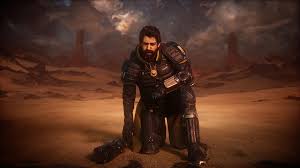
Saros attempts something similar with its protagonist, Arjun. The story explores failure, anger, memory, and personal responsibility. After defeating twisted Overlords and confronting painful revelations, Arjun eventually reaches a moment of apparent growth. He rejects rage, walks past the King, and finds a small sense of peace.
The problem comes after that ending. The gameplay sends players back to the beginning as if nothing has changed. In a roguelike, that can work if the story supports endless repetition. But Saros appears to give Arjun emotional closure, then continues the loop without properly addressing the contradiction.
Returnal made repetition feel thematically inevitable. Saros makes repetition feel mechanically required.
Should Saros Have Been a Linear Shooter?
Some players may argue that Saros should have abandoned roguelike elements entirely and become a linear third-person shooter. That solution is tempting, but it misses the bigger point. Returnal was special because of its roguelike DNA. A purely linear version of Returnal would likely have been less mysterious, less replayable, and less haunting.
The problem is not that Saros includes roguelike elements. The problem is that it does not fully trust them. Housemarque is at its best when it commits boldly to a strong idea. Saros feels designed to satisfy both roguelike fans and players who do not enjoy roguelikes, but that compromise weakens both sides.
What Saros Still Does Well
Despite these criticisms, Saros is not without strengths. Housemarque still understands movement, shooting, visual spectacle, and moment-to-moment action. The controls are smooth, combat can be intense, and the studio’s talent for chaos remains visible. At its best, Saros delivers fast, stylish, satisfying action that reminds players why Housemarque became so respected.
The issue is that strong shooting alone does not carry a roguelike. Without deep build variety, meaningful trade-offs, memorable run modifiers, and a story that fully supports repetition, the experience can lose its long-term grip.
Final Thoughts
Saros is a fascinating but conflicted follow-up to Returnal. It wants to be more approachable, and that goal is understandable. But in trying to soften the roguelike structure, Housemarque removes too many of the systems that gave Returnal its edge.
Returnal was not perfect. Its rooms repeated, bosses stayed mostly static, and build depth could have gone further. But it had a bold identity. It used repetition as both gameplay and storytelling. It felt dangerous, strange, and unforgettable.
Saros feels smoother and easier to enter, but also less distinctive. It has the shape of a roguelike without enough of the creative friction that makes the genre so addictive. For players searching for Saros review, Returnal spiritual sequel, best PS5 games 2026, roguelike shooters, third-person action games, Housemarque games, PlayStation exclusives, cloud gaming, game subscription services, and video game deals, Saros is still worth watching—but it also shows why bold design should not be sacrificed for broader appeal.
Housemarque’s greatest strength has always been fearless action design. The studio does not need to make roguelikes easier by making them emptier. It needs to make them deeper, stranger, smarter, and more alive.