James Bond Games History: From Classic 007 Adventures to GoldenEye 007 and the Future of Spy Action Games
Meta Description: Explore the history of James Bond video games, from early text-based 007 adventures to GoldenEye 007, one of the most influential first-person shooters ever made. Discover how Bond shaped spy action games, movie-based games, retro gaming, FPS multiplayer, and the future of licensed video games.
James Bond has been one of cinema’s most iconic heroes for more than 60 years, but the world’s most famous secret agent has also built a long and fascinating legacy in video games. Based on Ian Fleming’s legendary spy, Bond is almost perfectly designed for interactive entertainment. He has gadgets, exotic locations, dangerous villains, fast cars, secret missions, and enough style to turn every level into a cinematic adventure.
Not every James Bond game has been a masterpiece, and that is true for many licensed video games. However, the franchise has produced several memorable titles, including one game that changed console shooters forever: GoldenEye 007. As modern players rediscover classic Bond games through re-releases on platforms like Nintendo Switch and Xbox, it is the perfect time to look back at how 007 evolved across decades of gaming.
For readers searching for James Bond games, GoldenEye 007 history, best spy games, retro FPS games, movie-based video games, Nintendo 64 classics, Xbox game deals, Nintendo Switch games, cloud gaming, and video game deals, the history of 007 gaming remains one of the most interesting stories in licensed entertainment.
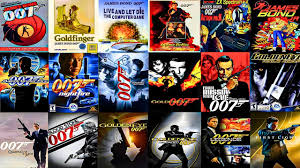
The Early Years of James Bond Video Games
James Bond entered the gaming world in the early 1980s, long before cinematic action games became common. The earliest Bond games were very different from the fast-paced shooters modern players associate with 007. Instead of high-definition explosions or online multiplayer, many early Bond titles relied on text, imagination, and simple visuals.
One of the earliest examples was Shaken But Not Stirred, released in 1982. This text-based adventure leaned heavily into Bond’s literary roots. Players interacted with the story through written commands, solving problems and moving through a spy narrative using imagination rather than reflexes. It may look primitive today, but at the time, text adventures were a natural format for espionage stories.
In 1983, James Bond 007 arrived with a more visual approach. Released for systems such as the Atari 2600, it included missions inspired by several famous Bond films, including Diamonds Are Forever, Moonraker, For Your Eyes Only, and The Spy Who Loved Me. The game was simple by modern standards, but it showed that Bond could be adapted into interactive missions built around action and recognizable movie moments.
Text Adventures, Action Games, and 1980s Experimentation
The 1980s were a period of experimentation for James Bond games. Developers tried different styles because there was no clear formula yet for what a Bond game should be. Some games focused on storytelling, while others leaned into action sequences, vehicles, or arcade-style combat.
A View to a Kill received multiple game adaptations in 1985. One version used the familiar text-adventure structure, while another attempted a more action-driven experience inspired by the film’s international set pieces. These games captured the spirit of Roger Moore’s Bond era, where gadgets, exotic missions, and dramatic escapes were central to the fantasy.
Goldfinger, released in 1986, returned to text-based gameplay and included dry British humor, making it feel closer to the tone of Ian Fleming’s novels. Interestingly, Raymond Benson contributed to the game’s plot and design before later writing official Bond novels. That connection gave the project a unique place in Bond history.
By 1987, The Living Daylights tried to bring Timothy Dalton’s tougher Bond into the gaming world with run-and-gun action. The game included gadgets, shootouts, and a more direct action focus. A year later, Live and Let Die adapted the film’s famous boat chase into a video game format, proving that Bond’s vehicle sequences could work well as interactive set pieces.
Bond Games Find More Action in the Late 1980s and Early 1990s
As game hardware improved, James Bond titles began moving closer to action-adventure gameplay. 007: Licence to Kill, released in 1989, used a top-down perspective and featured vehicle-based missions inspired by the film. Players chased the villain Franz Sanchez across multiple stages, giving the game more variety than earlier text-heavy entries.
In 1990, James Bond 007 Action Pack brought together multiple Bond titles in one package. It was an ambitious compilation that even included hardware like the Magnum Light Phaser gun in certain bundles. Desmond Llewelyn, famous for playing Q, also appeared in mission briefings, helping bring a stronger connection to the film series.
The same era also included games like The Spy Who Loved Me and 007 James Bond: The Stealth Affair. The latter is especially interesting because it used a point-and-click adventure format. That style was well suited to espionage because it encouraged investigation, dialogue, puzzle-solving, and exploration. Although it was not originally designed as a Bond game in every region, it still showed that 007 could fit outside pure action.
The Strange Case of James Bond Jr.
In the early 1990s, the Bond brand also experimented with younger audiences through James Bond Jr., an animated spin-off about Bond’s nephew. Like many animated tie-in games of that era, the video game version struggled to capture the magic of the main franchise. It played more like a standard action-platformer than a true spy adventure.
While not remembered as a classic, James Bond Jr. is still part of the franchise’s gaming history because it shows how wide the Bond brand had become. Developers and publishers were willing to try anything, from text adventures to platformers, in search of the right interactive identity for 007.
GoldenEye 007 Changed Everything
Everything changed in 1997 with the release of GoldenEye 007 for the Nintendo 64. Based on Pierce Brosnan’s first Bond film, GoldenEye 007 was not just a successful movie adaptation. It became one of the most important first-person shooter games of the 1990s and one of the defining titles of the Nintendo 64 era.
At a time when many console shooters struggled with controls, level design, and pacing, GoldenEye 007 proved that first-person shooters could work brilliantly outside PC gaming. Its campaign offered stealth, objectives, memorable levels, gadgets, and cinematic mission structure. Instead of simply running through corridors and shooting everything, players had to complete specific objectives, use spy tools, and approach missions with more strategy.
The game’s biggest legacy, however, came from its multiplayer mode. Famously developed with limited resources and added late in development, GoldenEye’s split-screen multiplayer became legendary. Friends gathered around televisions to play deathmatches in Facility, Complex, Temple, and other classic maps. Characters like Oddjob became infamous, weapons like the Golden Gun became iconic, and local multiplayer became a core part of the game’s identity.
Why GoldenEye 007 Still Matters
GoldenEye 007 still matters because it helped shape the future of console FPS design. Before games like Halo, Call of Duty, or modern online shooters dominated consoles, GoldenEye showed that the genre could thrive with a controller and a living-room multiplayer setup.
Modern players may find some elements dated. The controls can feel unusual, the graphics are clearly from another era, and some mission design can be frustrating compared with today’s standards. But the game remains important because it captured the Bond fantasy better than almost any previous title. It made players feel like a secret agent, not just another action hero.
Its return on modern platforms such as Nintendo Switch and Xbox has allowed new players to experience an important piece of gaming history. For longtime fans, it is a nostalgic reminder of a time when four-player split-screen could define an entire weekend.
What Makes a Great James Bond Game?
The best James Bond games understand that 007 is not only about shooting. A great Bond game needs style, stealth, gadgets, exotic locations, memorable villains, fast vehicles, and dramatic mission goals. Bond should feel clever as well as dangerous.
GoldenEye succeeded because it balanced action with espionage. Players were not simply surviving waves of enemies. They were infiltrating facilities, planting devices, gathering intelligence, escaping danger, and completing objectives that felt connected to the spy fantasy.
This is why Bond remains a strong fit for modern game design. A new 007 game could combine stealth, action, social infiltration, cinematic storytelling, vehicle chases, gadget-based puzzles, and player choice. Few franchises offer that much variety naturally.
The Future of James Bond Games
The future of James Bond in gaming is exciting because the character still has enormous potential. Modern technology can finally deliver the kind of cinematic spy experience that early developers could only imagine. With realistic graphics, advanced AI, motion capture, branching missions, and immersive level design, a new Bond game could become one of the best spy action games of its generation.
Players today are also more open to different styles. A Bond game does not have to be only a shooter. It could include stealth missions, third-person action, dialogue choices, investigation, gadget crafting, vehicle gameplay, and high-stakes set pieces. The best version of Bond gaming would understand that being 007 means thinking, improvising, charming, and surviving.
Final Thoughts
James Bond’s video game history is uneven, but it is also fascinating. From early text adventures like Shaken But Not Stirred to experimental 1980s action games and the legendary success of GoldenEye 007, the franchise has constantly evolved with gaming technology.
For fans searching for James Bond games, GoldenEye 007, best spy games, retro FPS games, Nintendo 64 classics, Xbox game deals, Nintendo Switch games, cloud gaming, game subscription services, and video game deals, Bond’s gaming legacy remains worth exploring.
Not every 007 mission was successful, but the best ones proved something important: James Bond belongs in video games. With the right developer, the right technology, and the right balance of action, stealth, and style, the next Bond game could once again redefine what a spy game can be.